FREE SHIPPING ON ORDERS OVER ₹599 · HANDMADE FRESH IN KERALA

Coconut Oil for Skin: Benefits, How to Use, and Why Cold-Pressed Matters
Everything you need to know about using coconut oil on your skin -- the real benefits, the right way to apply it, and why cold-pressed is the only type worth using for skincare. Includes Wellniz product guide.
4/12/20264 min read
The Coconut Oil Confusion
There is a persistent myth that coconut oil clogs pores and causes breakouts. There is also a genuine group of people for whom this is true. The reason both things can be correct at the same time comes down to two variables: which type of coconut oil, and which skin type.
Refined coconut oil -- the kind used for cooking, which is also the kind in most cheap skincare products -- has been processed at high heat. This strips many of its beneficial compounds and can leave behind residues that sit on the skin's surface and, for some skin types, contribute to congestion and breakouts.
Cold-pressed virgin coconut oil is extracted at low temperature without chemicals. It retains its full fatty acid profile, its antibacterial compounds, its antioxidants, and its ability to penetrate the skin rather than just coat it. This is the version that delivers the benefits.
For dry and normal skin types, cold-pressed coconut oil is one of the most effective natural skin treatments available in India. For very oily or acne-prone skin, lighter oils or tea tree-blended variants are better suited. As always, a patch test before first use is sensible.
The Real Benefits of Cold-Pressed Coconut Oil for Skin
Deep Moisturization
Most moisturizers work by creating a film on the skin's surface to prevent water loss. Cold-pressed coconut oil does something more useful -- its high lauric acid content (around 50% of its fatty acid composition) allows it to actually penetrate the outer layers of skin and nourish from within. The result is hydration that lasts significantly longer than most surface moisturizers.
Antimicrobial Protection
Lauric acid, when present on skin, converts into monolaurin -- a compound with demonstrated antimicrobial and antifungal properties. This makes cold-pressed coconut oil useful not just as a moisturizer but as a protective barrier against the bacterial and fungal skin problems that are common in India's humid climate.
Anti-Inflammatory Effect
Coconut oil contains compounds that help reduce skin inflammation. For skin that is irritated, red, or reacting to environmental stressors -- pollution, hard water, UV exposure -- the anti-inflammatory properties help reduce visible redness and discomfort across the body.
Antioxidant Protection
The vitamin E present in cold-pressed coconut oil provides antioxidant protection against free radical damage -- the kind caused by UV exposure and pollution. This is particularly relevant to Indian skin, which faces some of the highest ambient UV levels in the world, and to exposed areas of the body like arms, neck, and hands.
Oil Pulling: A Related Benefit
Kerala's Ayurvedic tradition extends the benefits of coconut oil beyond topical application. Oil pulling -- swishing coconut oil around the mouth for 10-20 minutes -- is a traditional practice believed to remove toxins and support oral health. Wellniz also offers oil pulling products based on this tradition, extending the brand's pure coconut philosophy into oral wellness.
How to Use Coconut Oil on Your Skin: The Right Method
As a Daily Body Moisturiser
Bathe with a mild, sulphate-free cleanser
Pat skin almost dry, leaving it slightly damp
Take a small amount of Wellniz Coconut Moisturizer -- a little goes a long way
Warm it between your palms for 5 seconds
Apply with gentle strokes -- do not rub aggressively
Allow 10-15 minutes to absorb before dressing
As an Overnight Treatment
Apply a slightly more generous amount before sleeping. The skin does most of its repair and regeneration at night, and a coconut oil treatment provides the nutrients needed for this process. Focus on areas prone to dryness -- elbows, knees, shins, and heels. Rinse or wipe off any residue in the morning.
As a Spot Treatment
For particularly dry patches -- elbows, heels, knees, or areas prone to cracking -- apply a small amount directly to the affected area as a targeted treatment in addition to your regular routine. Coconut oil is especially effective on thicker, rougher skin where deeper penetration is needed.
As a Pre-Bath Oil Treatment
A traditional Kerala approach: apply coconut oil to dry skin 20-30 minutes before bathing, allow it to absorb, then bathe as normal. This pre-treatment method gives the oil time to work before the cleansing step, delivering deep nourishment without leaving a heavy residue after showering.
Cold-Pressed vs. Refined: Why the Difference Matters
This distinction cannot be understated. When coconut oil is processed at high heat, the following happens:
Lauric acid content decreases
Natural antibacterial compounds are reduced or eliminated
Vitamin E and antioxidants are degraded
The oil's molecular structure changes in ways that reduce its ability to penetrate skin
Chemical residues from bleaching and deodorising agents may remain
Cold-pressed oil retains everything. It is extracted by mechanical pressing at temperatures below 49 degrees Celsius, with no chemicals involved. Wellniz sources its coconut oil exclusively from small family farms in Kerala using traditional cold-pressing methods.
Which Wellniz Coconut Moisturizer Is Right for You?
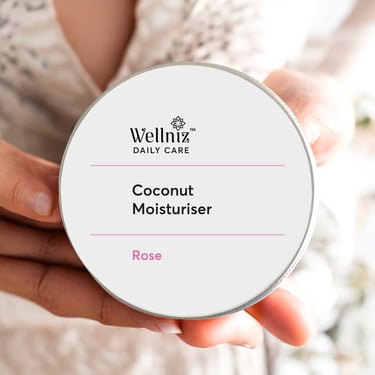
Coconut Rose -- for dry, mature, or sensitive skin needing deep nourishment; rose essential oil adds calming and brightening benefits
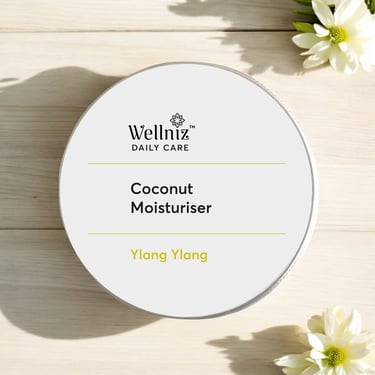
Coconut Ylang Ylang -- for combination skin needing balance; ylang ylang helps regulate sebum production across oily and dry zones
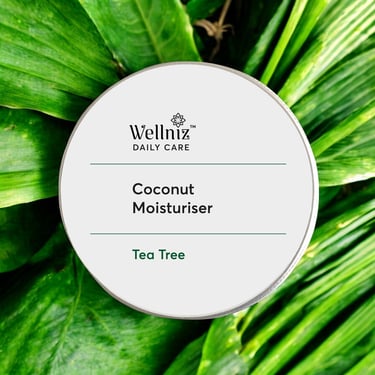
Coconut Tea Tree -- for oily, acne-prone, or blemish-affected skin; tea tree's antimicrobial properties complement coconut oil's
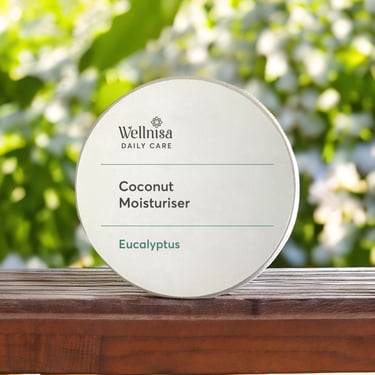
Coconut Eucalyptus -- for dull or congested skin needing refreshment; eucalyptus has cooling, antiseptic properties
All are available at wellniz.in from Rs. 299.
Frequently Asked Questions
Does coconut oil clog pores?
Refined coconut oil can contribute to congestion in some skin types, particularly oily or acne-prone skin. Cold-pressed coconut oil, which retains a different molecular profile, is much less likely to do so. People with very oily skin may still prefer the Tea Tree or Eucalyptus variants, which are better suited to higher-sebum skin types. A patch test before full use is always a good first step.
Can I use coconut oil as a sunscreen?
No. Coconut oil provides minimal natural SPF -- approximately 4-6 -- which is entirely insufficient for Indian sun exposure levels. Always use a separate, properly formulated SPF product for sun protection.
Is coconut oil good for oily skin?
It depends on the individual. Cold-pressed coconut oil in small amounts is tolerated by some people with oily skin without issues. However, for oily or acne-prone skin, Wellniz Coconut Tea Tree Moisturizer is generally better suited, as the tea tree component actively addresses excess oil and bacterial buildup. Patch test first.
What is oil pulling and does it work?
Oil pulling is the traditional Ayurvedic practice of swishing oil -- typically coconut or sesame -- around the mouth for 10-20 minutes to support oral hygiene and overall health. Studies show it reduces oral bacteria and may improve gum health. Wellniz offers oil pulling products as part of its Kerala wellness range.
How much coconut oil should I apply to my skin?
A small, pea-to-almond sized amount is usually sufficient for the body, adjusted by area. Apply to slightly damp skin after bathing for best results. Warm it between your palms first to aid absorption and even distribution. More than needed can leave a greasy feeling, particularly in warmer weather.
Get in touch
hello@wellniz.in

Our Promise
No artificial ingredients used in our products
Terms of Service