FREE SHIPPING ON ORDERS OVER ₹599 · HANDMADE FRESH IN KERALA

What Is Eczema? A Natural Support Guide for Indian Skin
Eczema affects up to 20% of Indian children and 2-10% of adults. This honest guide explains what eczema is, what triggers it in India's climate, and how natural ingredients can support management alongside medical treatment.
6/16/20265 min read


Important: This article provides general educational information about eczema and the supportive role of natural skincare. Eczema is a medical condition requiring diagnosis and treatment by a dermatologist. Never replace prescribed eczema treatment with natural products. If you have suspected eczema, see a doctor. If you have diagnosed eczema, use this information to complement your medical treatment plan.
What Eczema Actually Is
Atopic dermatitis — commonly called eczema — is a chronic inflammatory skin condition characterised by a genetic defect in the filaggrin protein that is essential for maintaining the skin barrier's structural integrity. A compromised filaggrin-deficient barrier allows allergens, bacteria, and irritants to penetrate more easily, triggering an overactive immune response that produces the hallmark eczema symptoms: intense itch, redness, dry patches, and in severe cases, weeping, crusting skin.
In India, atopic dermatitis affects approximately 15-20% of children and 2-10% of adults, with higher prevalence in urban environments. The condition typically begins in childhood — many children see significant improvement by adulthood, though 25-30% continue to have eczema as adults. Flares are triggered by specific environmental and dietary factors, many of which are particularly prevalent in Indian urban settings.
Common Eczema Triggers in India
Environmental
Dust mites — particularly prevalent in warm, humid Indian homes; bedding and upholstered furniture are primary habitats
Synthetic fabrics — polyester and nylon trap sweat, reduce skin breathability, and cause friction that aggravates eczema; cotton is essential
Detergent residue on clothing — commercial laundry detergents with synthetic fragrance and optical brighteners left in fabric after washing are a consistent eczema trigger; use fragrance-free detergents and rinse twice
Hard water — mineral deposits from tap water disrupt skin pH and barrier function; worse in Delhi, Bangalore, and other metro cities with hard municipal water
Extreme temperature changes — moving between outdoor summer heat and heavily air-conditioned indoor environments causes rapid skin hydration changes that stress the compromised barrier
Products
Synthetic fragrance in any product — one of the most consistent eczema triggers; 'parfum' on any ingredient label means potential flare risk
Sulphate-containing cleansers — SLS/SLES strip the barrier lipids that eczema skin produces too little of to begin with
Preservatives like parabens and formaldehyde releasers — sensitise already reactive skin
Any new product introduced without patch testing — the compromised barrier of eczema skin is more likely to react to new compounds
How Natural Skincare Supports Eczema Management?
Daily Emollient Application: The Core Intervention
The most evidence-backed non-prescription intervention for eczema is consistent daily emollient application — moisturising with a product that both nourishes the skin and provides an occlusive barrier to reduce water loss. This should happen twice daily even when skin appears clear. Stopping during remission is one of the most common reasons for flare recurrence.
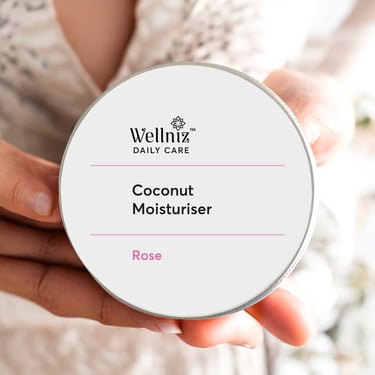
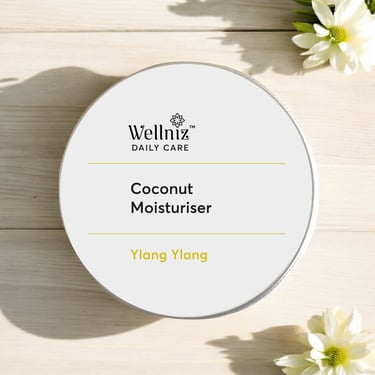
Wellniz Coconut Rose or Coconut Ylang Ylang Moisturiser meets the key requirements for an eczema emollient: fragrance-free in the sense that it contains no synthetic fragrance (the essential oil is natural, not synthetic — a meaningful distinction for eczema), anhydrous formula requiring no synthetic preservatives, and a combination of nourishing coconut oil and occlusive beeswax (Cera alba is listed on National Eczema Association resources as an accepted emollient). Apply to slightly damp skin immediately after bathing — within 3 minutes of leaving water — to maximise moisture retention.
Barrier Nourishment Through Lauric Acid
Cold-pressed coconut oil's lauric acid penetrates the outer skin layers and replenishes the fatty acid component of the barrier that filaggrin-deficient skin underproduces. Multiple clinical studies have examined coconut oil for atopic dermatitis, with two randomised controlled trials showing coconut oil emollient comparable to mineral oil for eczema management and superior in antimicrobial activity. The antimicrobial activity is relevant because Staphylococcus aureus colonisation is a significant eczema exacerbator.
Anti-Inflammatory Support
Eczema is fundamentally an inflammatory condition. Both rose essential oil (geraniol, citronellol) and ylang ylang (beta-caryophyllene, linalool) have documented anti-inflammatory properties that support the same inflammatory pathways implicated in eczema. Applied daily, these gentle anti-inflammatory compounds provide background support that can reduce the frequency and severity of flares.
Reducing Trigger Exposure
The most impactful change for eczema sufferers applying natural skincare principles more broadly:
Replace all laundry products with fragrance-free, dye-free alternatives
Use Wellniz Rose Mist after bathing in hard water to restore the pH disrupted by mineral-heavy tap water
Switch all clothing to 100% cotton, including sleepwear and bedsheets
Install a shower filter if hard water is a consistent trigger
Avoid any new product without 24-hour patch testing on the inner forearm first
Bathing Protocol for Eczema Skin
Bathe in cool to lukewarm water — hot water strips the barrier lipids eczema skin is already deficient in
Keep bath or shower to 10-15 minutes maximum
Use only fragrance-free, sulphate-free cleanser — besan paste is an excellent natural option for mild cleansing days
Pat dry gently with a soft cotton towel — do not rub
Apply Wellniz Coconut Rose or Ylang Ylang Moisturiser within 3 minutes of drying while skin is slightly damp
Apply prescribed emollient or steroid cream (if prescribed) over or under the Wellniz moisturiser as directed by your dermatologist
Frequently Asked Questions
Can eczema be cured naturally?
No. Eczema is a chronic genetic condition — the filaggrin gene defect that predisposes to it is not addressable through skincare. In many children, eczema improves significantly or goes into remission as the immune system matures. In adults with chronic eczema, the goal is management — reducing flare frequency, severity, and duration — not cure. Natural skincare supports management; it does not cure the underlying condition.
Is coconut oil safe for eczema?
Generally yes, for most eczema skin. Cold-pressed coconut oil's lauric acid supports the fatty acid barrier that eczema skin is deficient in, and two RCTs support its use as an eczema emollient. However, a minority of people with eczema have coconut sensitivity. Always patch test before full use on eczema-affected areas.
Should I use Wellniz Neem Mist on eczema skin?
With caution. Neem's anti-inflammatory properties can be beneficial for eczema. However, during active flares when the skin barrier is significantly compromised, the introduction of any new botanical compound carries higher reaction risk. During remission, Wellniz Neem Mist can be carefully introduced with patch testing. Avoid use on broken or weeping skin.
Does stress worsen eczema?
Yes. Cortisol from stress modulates immune function in ways that can lower the flare threshold — triggering eczema responses to stimuli that skin could normally tolerate. Stress management (exercise, sleep, mindfulness) is a legitimate eczema management tool alongside skincare and medical treatment.
Is eczema related to gut health?
Research increasingly confirms a gut-microbiome connection to atopic dermatitis. Probiotic supplementation has shown modest benefit in eczema prevention in infants and management in adults in some trials. Dietary interventions that support gut microbiome diversity (fermented foods, adequate fibre, omega-3) provide supportive benefit for eczema alongside standard management.
Why does eczema get worse in Indian summer?
Heat causes sweating, which irritates eczema skin directly. Sweat contains lactic acid and inflammatory cytokines that trigger flares. Occlusive clothing traps sweat against the skin. Additionally, summer in India brings more dust mite activity and outdoor allergens. Natural management in summer: cool showers, breathable cotton clothing, Wellniz Neem Mist for its cooling and antibacterial properties, and applying emollient after any sweating episode.
Can I use Wellniz products on a child with eczema?
Wellniz products are formulated for adults. For children with eczema, consult your paediatrician or paediatric dermatologist before introducing any new product, including natural ones. Children's skin has different permeability characteristics, and even essential oils at low concentrations warrant paediatric guidance for use on eczema skin.
What is the difference between eczema and dry skin?
Dry skin is a skin condition — insufficient sebum and barrier lipid production. Eczema is an immune-mediated disease — a genetic barrier defect combined with immune dysregulation that produces chronic inflammation. Dry skin responds well to moisturisation. Eczema requires medical treatment alongside moisturisation. The key diagnostic difference is the intense, often sleep-disrupting itch of eczema, its characteristic distribution patterns, and its association with other atopic conditions (asthma, allergic rhinitis).
Can natural products help with eczema in India?
Natural products can provide meaningful supportive care for eczema alongside medical treatment. The core function natural skincare plays in eczema is barrier support — daily emollient application of fragrance-free, minimal-ingredient products maintains the skin barrier that eczema structurally compromises, reducing flare frequency and severity. Wellniz Coconut Rose or Ylang Ylang Moisturisers provide cold-pressed coconut oil (lauric acid for barrier nourishment), beeswax (breathable occlusive barrier recognised as an approved emollient), and gentle essential oils with anti-inflammatory properties. Natural products do not cure eczema — this requires medical diagnosis and prescription treatment. They support daily management by maintaining the barrier and reducing trigger exposure.
Get in touch
hello@wellniz.in

Our Promise
No artificial ingredients used in our products
Terms of Service