FREE SHIPPING ON ORDERS OVER ₹599 · HANDMADE FRESH IN KERALA

Hormonal Skin in India: Why Skin Changes During Your Cycle and What Actually Helps Naturally
Skin that breaks out before your period, gets oilier mid-cycle, and dries out at other times is responding to hormonal shifts — not random bad luck. This guide explains the science and the Wellniz natural solutions.
5/26/20266 min read

Why does my skin break out before my period and what can I do naturally?
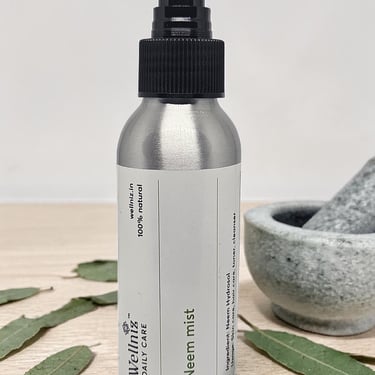
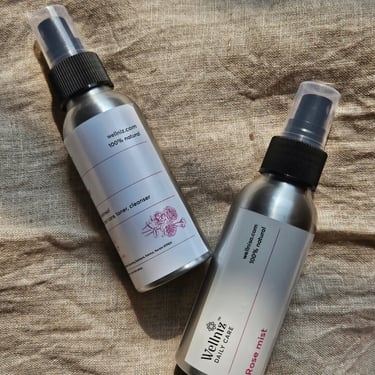
Pre-period breakouts are caused by the progesterone surge in the luteal phase (approximately days 21-28), which increases sebum production and triggers inflammation. Higher sebum feeds C. acnes bacteria, and rising prostaglandins increase inflammatory skin responses. Naturally, the most effective approach is: apply Wellniz Neem Mist twice daily from day 21 to manage bacterial load, use Wellniz Coconut Ylang Ylang Moisturiser to balance sebum production cyclically, and maintain Wellniz Rose Mist as a daily toner for pH balance and anti-inflammatory support throughout the cycle. These natural interventions reduce hormonal breakout severity without disrupting hormonal cycles the way some chemical acne treatments do.
The Monthly Skin Pattern Most People Never Diagnose
Most people with hormonal skin spend significant time and money trying to find the 'right' skincare product to stop their monthly breakouts. They cycle through cleansers, toners, and spot treatments, frequently blaming whichever product they used most recently when the breakout appears. The breakouts keep coming — not because the products are wrong, but because the diagnosis is wrong.
Hormonal skin is not a skincare problem in the conventional sense. It is a systemic biological process — the menstrual cycle — expressing itself in the skin. The skin is one of the most hormonally sensitive organs in the body, with receptors for oestrogen, progesterone, and androgens distributed throughout its layers. When hormone levels shift, the skin responds. The specific way it responds, and when, follows a predictable pattern that most people have never been taught to recognise.
The Four-Phase Skin Cycle
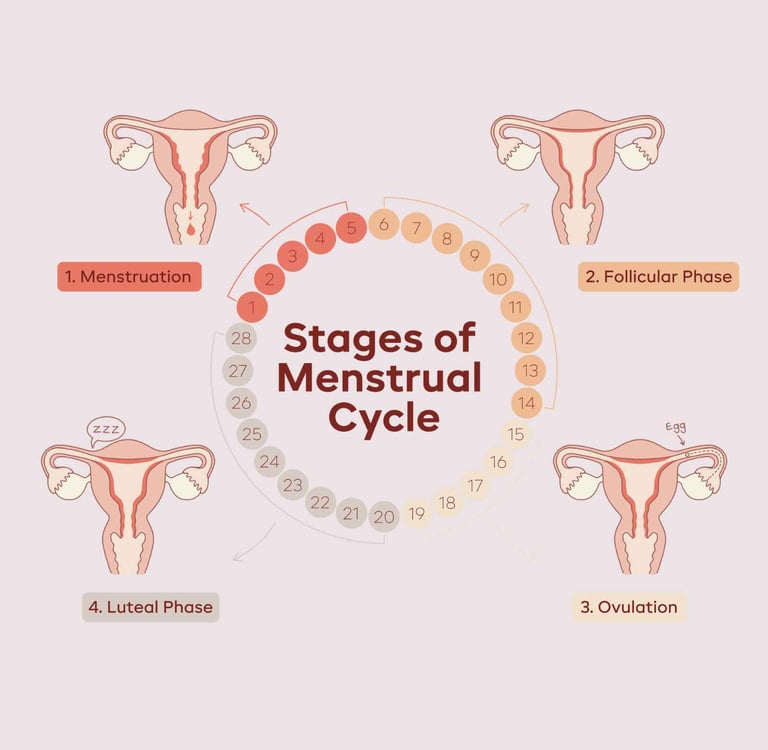
Phase 1: Menstrual (Days 1-5) — Dry, Dull, Sensitive
Oestrogen and progesterone are at their lowest. Skin is often at its most dehydrated and dull — barrier function is slightly reduced, skin looks less radiant. This is the phase where extra moisturisation matters most. Wellniz Coconut Rose Moisturiser's deeply nourishing formula addresses the increased dryness. Rose Mist's anti-inflammatory properties help with the heightened sensitivity common in this phase.
Phase 2: Follicular (Days 6-13) — Balanced, Best Skin of the Month
Rising oestrogen promotes collagen production, supports barrier function, and improves skin hydration. Most people with hormonal skin notice this as their best skin period — even, relatively clear, and naturally luminous. Maintain your regular routine without changes.
Phase 3: Ovulatory (Around Days 14) — Briefly Oily
The LH surge triggers a brief spike in testosterone-like activity, which increases sebum production for a few days around ovulation. For oily or acne-prone skin, this can be a minor breakout window. Wellniz Coconut Tea Tree Moisturiser used around this phase manages the bacterial environment before a breakout develops.
Phase 4: Luteal (Days 15-28) — Oily, Prone to Breakouts
The most significant phase for hormonal skin. Progesterone dominates. Sebum production increases substantially — driven by progesterone's stimulation of sebaceous glands and the slight rise in androgens. Skin becomes oilier, pores appear larger as they fill with sebum, and C. acnes bacteria proliferates in the sebum-rich environment. The prostaglandins that rise toward the end of this phase trigger inflammation — both in the uterus (producing period cramps) and in the skin (producing inflammatory acne).
Pre-period breakouts typically appear on the jaw, chin, and sometimes lower cheeks — areas with the highest concentration of androgen-sensitive sebaceous glands. This specific location pattern is the diagnostic signature of hormonal acne.
How Cortisol Makes Everything Worse
Cortisol — the stress hormone — directly increases sebum production through its effect on sebaceous glands, and disrupts the skin barrier's protective function. For anyone dealing with hormonal skin, stress in the days leading up to menstruation compounds the progesterone-driven sebum increase. This is why hormonal breakouts are consistently worse during stressful periods: two independent sebum-increasing signals firing simultaneously.
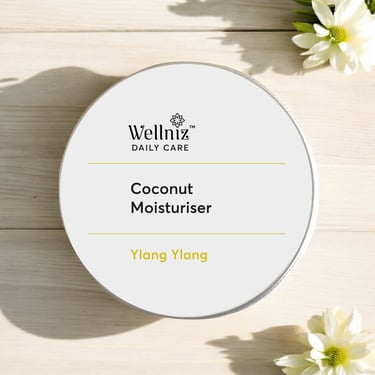
Ylang ylang's documented cortisol-reducing properties — confirmed in multiple aromatherapy studies — make Wellniz Coconut Ylang Ylang Moisturiser particularly relevant for hormonal skin: it addresses both the sebum-balancing need (ylang ylang regulates sebaceous gland activity) and, through its aromatic pathway, the cortisol amplification that worsens hormonal acne.
The Natural Hormonal Skin Routine
Daily Foundation (All Phases)
Cleanse morning and evening with besan paste or sulphate-free cleanser — avoid harsh cleansers that trigger rebound sebum production
Apply Wellniz Rose Mist after every cleanse — pH balance and anti-inflammatory support are beneficial throughout the cycle
Apply Wellniz Coconut Ylang Ylang Moisturiser — sebum-balancing action is most valuable in the second half of the cycle but beneficial year-round
Luteal Phase Adjustments (Days 21-28)
Switch from Ylang Ylang to Wellniz Coconut Tea Tree Moisturiser on days of highest sebum production (this varies by individual — track your skin for 2-3 cycles to identify your personal pattern)
Apply Wellniz Neem Mist twice daily during this phase — bacterial load management before breakouts form is significantly more effective than treating them after
Add a gentle turmeric + raw honey spot treatment to any early-stage spots — the anti-inflammatory action reduces the severity of forming breakouts
Reduce heavy or rich foods in the 3-5 days before menstruation — dairy and high-glycaemic foods amplify insulin-like growth factor 1 (IGF-1), which directly increases sebum production
Menstrual Phase Adjustments (Days 1-5)
Switch back to Wellniz Coconut Rose Moisturiser — deeper nourishment for the dryness this phase brings
Use Rose Mist more frequently — anti-inflammatory support for the heightened skin sensitivity
Reduce exfoliation — skin barrier function is slightly reduced in this phase; avoid besan masks or turmeric treatments for these days
What Hormonal Acne Is Not
Hormonal acne is not caused by skincare products, dirty skin, or dietary choices alone — though these factors can amplify its severity. It is a systemic biological process. The most powerful intervention is cycle tracking to anticipate patterns, which transforms reactive crisis management into proactive prevention. No skincare product, however effective, can override a significant hormonal signal — but the right natural routine consistently reduces breakout severity, duration, and frequency by 40-60% in most people who track and adjust systematically.
Frequently Asked Questions
Why do I always break out in the same places every month?
Hormonal acne follows a location pattern because the jaw, chin, and lower cheeks have the highest concentration of androgen-sensitive sebaceous glands. When androgen and progesterone levels peak in the luteal phase, these areas respond with highest sebum production. The same location pattern each month is the defining diagnostic signature of hormonal (as opposed to comedonal or bacterial) acne.
How do I know if my acne is hormonal?
Key indicators: breakouts appear in the same locations each month (jaw, chin, lower cheeks), they coincide with specific cycle phases (usually days 21-28), they are primarily inflammatory (red, painful, cystic) rather than comedonal (blackheads, whiteheads), and standard antibacterial acne treatments help but do not eliminate them. Tracking your skin alongside your cycle for 2-3 months will confirm the pattern.
Does Wellniz Ylang Ylang Moisturiser help with hormonal acne?
Yes, through two mechanisms. First, ylang ylang's linalool and benzyl acetate compounds regulate sebaceous gland activity, normalising overproduction during the luteal phase. Second, ylang ylang's cortisol-reducing aromatic properties reduce the stress-hormone amplification of sebum production. Neither mechanism is a pharmaceutical-grade intervention, but consistent daily use measurably reduces sebum overproduction over the cycle for most combination skin types.
Can diet affect hormonal acne?
Significantly. High-glycaemic foods (white bread, white rice, sugary snacks) increase insulin and IGF-1, which directly stimulate sebaceous glands. Dairy, particularly skimmed milk, has strong associations with acne in research studies — potentially through its hormone content. Reducing high-glycaemic and dairy foods in the 5-7 days before your expected period typically reduces breakout severity. This is the most evidence-backed dietary intervention for hormonal acne.
Is hormonal acne the same for everyone?
No. The hormonal drivers are universal, but the expression varies significantly by individual. Some people primarily experience oiliness without breakouts; others develop cystic acne. The severity is influenced by androgen sensitivity (genetic), stress levels (cortisol amplification), diet, and baseline sebum production rates. Tracking your personal cycle pattern is more useful than following generic hormonal acne advice.
Should I use different Wellniz products at different times of the month?
Yes — this is the core of a hormonally aware routine. Coconut Rose in the menstrual phase (days 1-5) for deeper nourishment, Coconut Ylang Ylang through the follicular and ovulatory phases for balance, and Coconut Tea Tree combined with Neem Mist through the luteal phase (days 21-28) for antimicrobial and sebum management. This is more effective than using the same product year-round regardless of cycle phase.
Can stress alone cause hormonal-pattern acne without the cycle being involved?
Yes. Cortisol from chronic stress activates the same sebaceous gland pathways as hormonal fluctuations. 'Stress breakouts' on the jaw and chin that are not clearly cycle-correlated are cortisol-driven rather than progesterone-driven, but the skin mechanism and the natural treatment approach are essentially the same.
Are hormonal acne treatments safe for Indian skin?
Spironolactone (an anti-androgen medication often prescribed for hormonal acne) is effective but requires medical prescription and is associated with side effects. For mild-to-moderate hormonal skin, the natural approach — cycle-adjusted skincare, dietary modification, stress management, and targeted antibacterial treatment — is both effective and safe for all skin types including sensitive Indian skin.
Get in touch
hello@wellniz.in

Our Promise
No artificial ingredients used in our products
Terms of Service