FREE SHIPPING ON ORDERS OVER ₹599 · HANDMADE FRESH IN KERALA

How to Fade Dark Spots and Tan Naturally: The Complete Indian Skin Guide
Dark spots and sun tan are India's most-searched skin concerns. This complete guide explains the science of melanin, the natural ingredients that actually work, and which Wellniz products to use for lasting results.
5/16/20266 min read
How do I naturally fade dark spots on Indian skin?
Natural fading of dark spots on Indian skin requires targeting tyrosinase — the enzyme that drives melanin overproduction. The most effective natural tyrosinase inhibitors are sandalwood oil (alpha-santalol), neem (nimbidin), and turmeric (curcumin). Apply Wellniz Coconut Sandalwood Moisturiser to affected areas daily — alpha-santalol has clinically proven tyrosinase-inhibiting action. Use Wellniz Rose Mist after cleansing to restore pH balance and prepare skin for better absorption. Consistent use for 4-6 weeks produces measurable improvement. Always use SPF in the morning — UV exposure re-triggers melanin production and undoes progress.
Why Indian Skin Is More Prone to Dark Spots?
Indian skin sits across Fitzpatrick skin types III to VI, with the majority at types IV and V. This means significantly higher baseline melanin concentration than lighter skin types — a genetic adaptation that evolved over thousands of years of life near the equator.
This is not a flaw. Higher melanin provides genuine protection: Indian skin takes far longer to develop UV-induced skin cancer, wrinkles slower, and maintains elasticity longer than lighter skin types. But the same protective mechanism has a cost: when the skin is triggered by sun exposure, inflammation, or injury, it produces excess melanin in the affected area. The result is hyperpigmentation — dark spots, uneven tan, and post-inflammatory marks — that can persist for months or years without targeted intervention.
Understanding the mechanism is important because it determines what actually works. Treatments that bleach or peel the surface do not address melanin overproduction at the cellular level. The most effective natural approach does.
The Science of Melanin: What You Are Actually Treating
Melanin is produced by melanocytes — specialised cells in the skin's basal layer. The enzyme that drives this production is tyrosinase. When UV radiation, inflammation, or injury activates tyrosinase, melanin production ramps up. The resulting pigment disperses through the surrounding skin cells, creating the darkening visible as a tan, dark spot, or post-acne mark.
The most effective natural interventions work by inhibiting tyrosinase activity — slowing melanin synthesis at the source rather than just removing surface-level darkening. This is a fundamentally different approach from physical exfoliation (which removes only the outermost dead skin cells) or harsh chemical peels (which damage the skin barrier while removing pigment).
The Four Best Natural Tyrosinase Inhibitors Available in India
1. Sandalwood Oil (Alpha-Santalol)
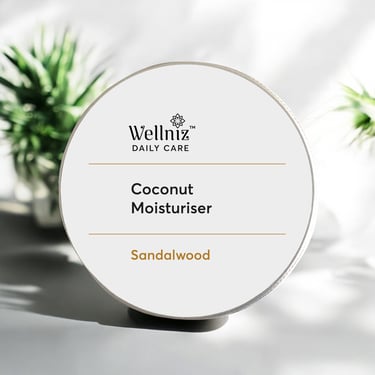
Sandalwood essential oil contains alpha-santalol, a compound with clinically proven tyrosinase-inhibiting activity. A scientific review published in the International Journal of Molecular Sciences confirmed that alpha-santalol reduces melanin synthesis in UV-stimulated skin. It is the most potent natural tyrosinase inhibitor in a ready-to-use format. Wellniz Coconut Sandalwood Moisturiser (Rs. 799) delivers this directly to skin in a cold-pressed coconut oil and beeswax base that aids absorption. Applied to dark spot areas once or twice daily, results are typically visible within 4-6 weeks.
2. Neem (Nimbidin and Related Compounds)
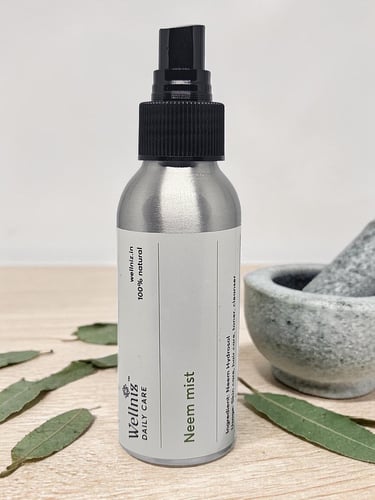
Neem's active compounds inhibit melanin synthesis through anti-inflammatory action — by reducing the inflammatory signal that triggers tyrosinase activation in the first place. For post-acne dark spots, where the hyperpigmentation was triggered by inflammation, this approach directly addresses the cause. Wellniz Neem Mist applied as a toner after cleansing provides ongoing antibacterial and anti-inflammatory protection, reducing both current hyperpigmentation and the conditions that create new dark spots.
3. Turmeric (Curcumin)
Curcumin, turmeric's active compound, inhibits both tyrosinase activity and the NF-kB inflammatory pathway that triggers melanin overproduction. Traditional Indian use as a pre-wedding Haldi ceremony skin treatment is backed by modern biochemistry. For DIY use: one teaspoon turmeric mixed with besan and raw milk or rose water, applied as a mask twice weekly for 15 minutes. Consistent use produces visible brightening within 3-4 weeks.
4. Rose Water (pH Balance and Melanin Control)
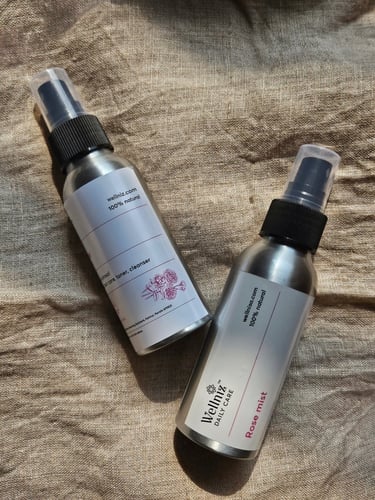
Rose hydrosol does not directly inhibit tyrosinase, but it supports the conditions under which natural brightening works most effectively. By restoring skin pH after cleansing, reducing inflammation, and preparing the skin to absorb active ingredients more effectively, Wellniz Rose Mist (Rs. 220) acts as a preparation layer that makes everything applied after it work harder. Applied between cleansing and the Sandalwood Moisturiser, it significantly improves absorption of alpha-santalol.
Tan Removal vs. Dark Spot Treatment: The Key Difference
Surface tan and deep dark spots require different treatment timelines and intensities. Understanding which you are dealing with prevents frustration and mismatched expectations.
Surface tan (UV-triggered melanin in the outermost skin layers) — responds within 2-4 weeks of consistent treatment and sun protection; besan exfoliation 2-3 times weekly accelerates this
Post-acne hyperpigmentation (melanin overproduction triggered by inflammatory acne) — takes 6-12 weeks; anti-inflammatory treatment (neem) must address the inflammation root as well as the visible mark
Melasma (hormonally triggered symmetrical facial pigmentation) — does not respond well to tyrosinase inhibitors alone; requires dermatological assessment alongside natural maintenance
The Wellniz Natural Brightening Routine
Morning
Cleanse gently with besan + water paste or a mild sulphate-free cleanser
Spritz Wellniz Rose Mist while skin is still slightly damp — allow 30 seconds to absorb
Apply a small amount of Wellniz Coconut Sandalwood Moisturiser to full skin — focus extra application on dark spot areas
Apply SPF 30+ — non-negotiable; all natural brightening progress is undone by unprotected UV exposure
Evening
Cleanse thoroughly to remove SPF, pollution, and day's sebum
Spritz Wellniz Neem Mist — allows antibacterial and anti-inflammatory action overnight
Apply Wellniz Coconut Sandalwood Moisturiser — slightly more generous than morning application
Twice weekly: apply a turmeric + besan mask for 15 minutes before the Neem Mist step
The single most important rule: never skip SPF in the morning when treating hyperpigmentation. Every day of unprotected sun exposure re-triggers tyrosinase and re-deposits melanin in the areas you are trying to fade. SPF is not optional — it is what protects your progress.
What Does Not Work (And Why)
Undiluted lemon juice — photosensitising (makes skin more UV reactive) and disruptive to skin barrier; may worsen pigmentation with sun exposure
Baking soda — highly alkaline; disrupts skin pH acid mantle and weakens barrier, increasing inflammatory pigmentation risk
Harsh bleaching creams with hydroquinone — effective in the short term but associated with ochronosis (permanent blue-black darkening) with long-term use; banned at high concentrations in India
Physical scrubbing on active dark spots — damages skin barrier and triggers more inflammation, potentially worsening hyperpigmentation
Realistic Timelines
Natural brightening requires patience. The skin's cellular renewal cycle is approximately 28 days — meaning you need to give any natural treatment at least one full cycle before expecting visible results, and 2-3 cycles for meaningful change. Most people using the Wellniz brightening routine consistently see:
Week 1-2: Skin feels more even-textured and better hydrated; no visible brightening yet
Week 3-4: Slight reduction in surface tan; skin looks less dull
Week 6-8: Visible fading of dark spots; more even tone across previously pigmented areas
Week 10-12: Significant improvement in even-toned appearance; post-acne marks lighter
Frequently Asked Questions
How long does it take for dark spots to fade naturally?
Surface tan typically fades in 2-4 weeks of consistent daily treatment with natural tyrosinase inhibitors and SPF protection. Post-acne dark spots and deeper hyperpigmentation take 6-12 weeks. Melasma (hormonal pigmentation) requires longer-term management and often dermatological support alongside natural maintenance.
Does sandalwood actually help with dark spots?
Yes. Alpha-santalol in genuine sandalwood essential oil has clinically proven tyrosinase-inhibiting activity, reducing melanin synthesis in UV-stimulated skin. Wellniz Coconut Sandalwood Moisturiser delivers this in a daily-use format. Results require 4-6 weeks of consistent application.
Is lemon juice safe for dark spots?
No, not directly on the skin. Lemon juice contains citric acid that can be mildly exfoliating, but it also makes skin significantly more photosensitive. Applied in the morning or followed by sun exposure, it typically worsens hyperpigmentation. If using lemon in DIY preparations, apply only at night and in a diluted form.
What is the fastest natural way to remove tan?
The fastest natural approach combines: physical exfoliation with besan 2-3 times per week (removes dead melanin-containing cells), Wellniz Rose Mist daily as a pH-balancing toner, Wellniz Coconut Sandalwood Moisturiser for tyrosinase inhibition, and consistent SPF use to prevent re-tanning. Most people see visible tan reduction within 2-3 weeks of this combined approach.
Can Indian skin use all-natural brightening products?
Yes. Indian skin particularly benefits from natural brightening approaches because it is more prone to post-inflammatory hyperpigmentation — meaning harsh chemical treatments that irritate the skin can actually worsen dark spots. Gentle, anti-inflammatory natural ingredients like sandalwood, neem, and turmeric work with the skin's own mechanism rather than against it.
Will the dark spots come back after fading?
They can, if UV triggers are not managed. Faded dark spots are permanent if the underlying trigger (UV exposure, acne, inflammation) is eliminated. If sun exposure continues without SPF protection, or if acne recurs, new pigmentation will form. Prevention — SPF every morning and anti-inflammatory daily skincare — is what maintains results.
Is Wellniz Sandalwood Moisturiser suitable for all skin tones?
Yes. It contains no bleaching agents or skin-lightening chemicals. Alpha-santalol inhibits overproduction of melanin in areas of hyperpigmentation without affecting normally pigmented skin. It does not lighten your natural skin tone — it normalises areas where excess melanin has accumulated.
Can I use Wellniz products alongside a dermatologist-prescribed hyperpigmentation treatment?
In most cases, yes. Wellniz products are gentle and contain no actives that conflict with common prescription treatments. If you are using hydroquinone, tretinoin, or prescription azelaic acid, introduce Wellniz products gradually and check with your dermatologist if combining.
How much does the Wellniz brightening routine cost?
The core routine — Coconut Sandalwood Moisturiser (Rs. 799 for 100g) and Rose Mist (Rs. 220 for 100ml) — costs Rs. 1,019. Adding Neem Mist (Rs. 220) for the evening step brings the total to Rs. 1,239. Given the product concentration, this typically covers 2-3 months of daily use.
Get in touch
hello@wellniz.in

Our Promise
No artificial ingredients used in our products
Terms of Service