FREE SHIPPING ON ORDERS OVER ₹599 · HANDMADE FRESH IN KERALA

Natural Lip Care: How to Heal Dry, Cracked Lips Without Petroleum or Synthetic Ingredients
Vaseline and synthetic lip balms coat lips without actually healing them. This guide explains what dry lips actually need, why petroleum is not the answer, and how Wellniz coconut-beeswax formula works better.
5/22/20265 min read
What is the best natural alternative to Vaseline for lips in India?
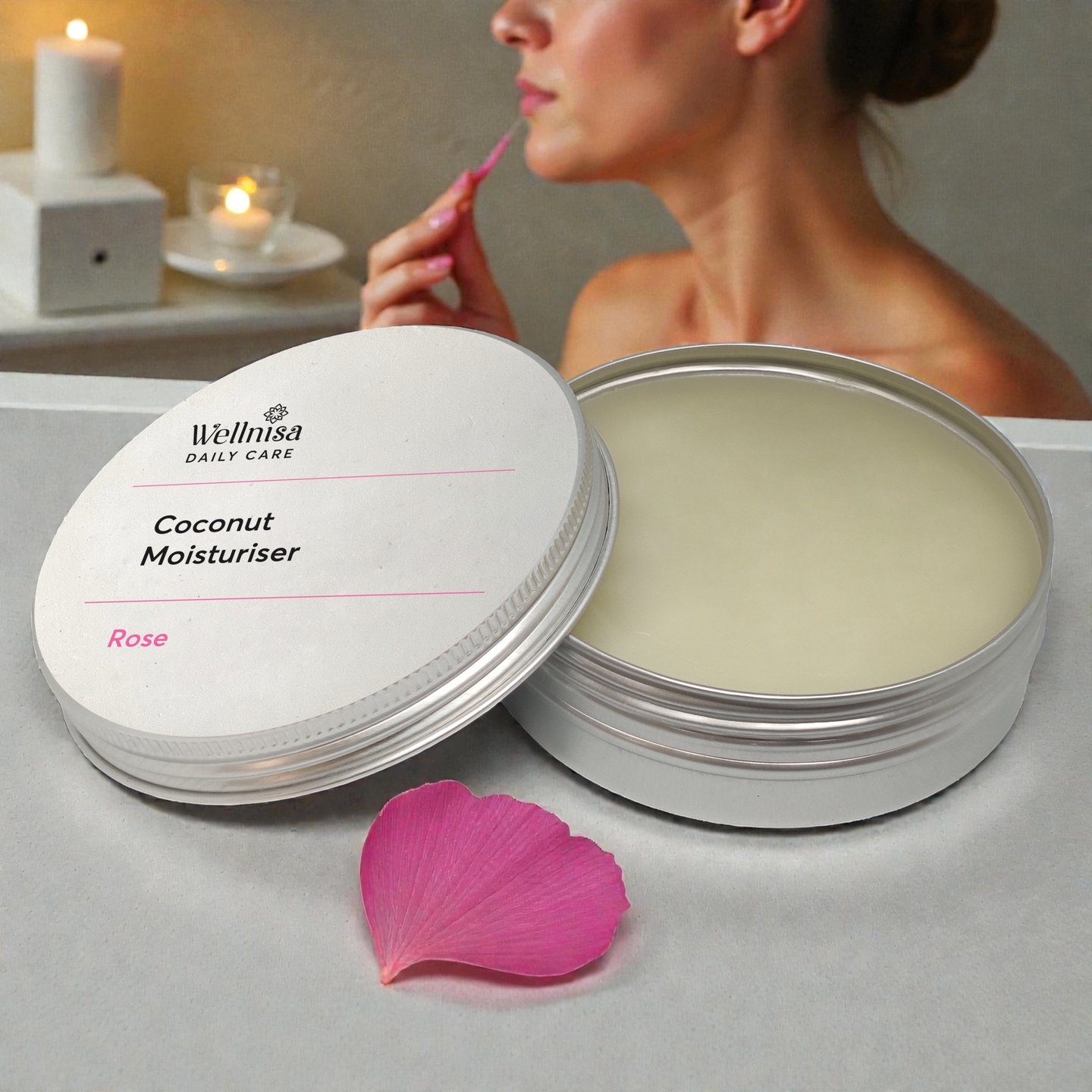
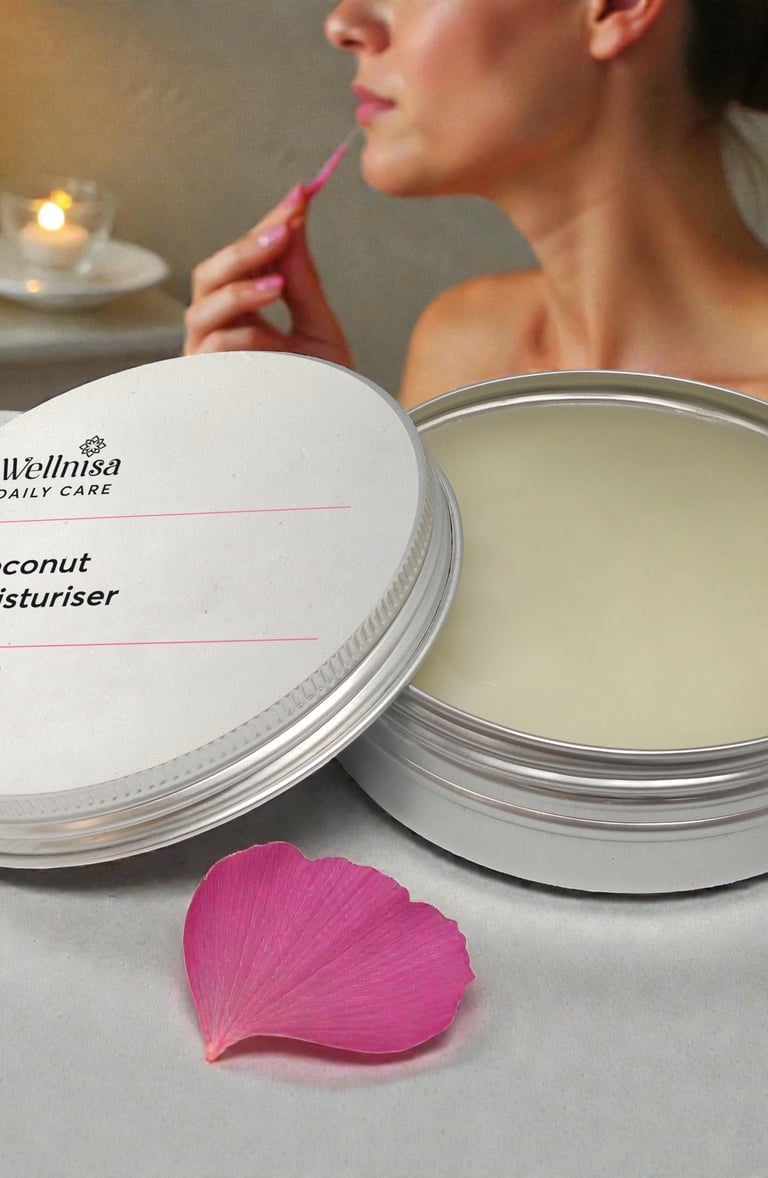
Cold-pressed coconut oil combined with beeswax is significantly more effective than petroleum jelly for dry lips. Coconut oil's lauric acid nourishes the delicate lip skin from within; beeswax creates a breathable protective barrier that prevents moisture loss without sealing the surface the way petroleum jelly does. Wellniz Coconut Rose Moisturiser, applied to lips before sleeping and as needed during the day, heals dry lips rather than just coating them. Unlike Vaseline, it does not require continuous reapplication to maintain its effect.


Why Vaseline Is Not Actually Treating Your Lips
Petroleum jelly is the most widely used lip care product in India. It is cheap, universally available, and immediately effective — in the sense that it makes lips feel smooth for a short period after application. The problem is what it is not doing.
Petroleum jelly (petrolatum) is an inert mineral hydrocarbon — a byproduct of oil refining with no nourishing compounds of any kind. No fatty acids. No vitamins. No antioxidants. No compounds that interact with skin biology. It works by creating an occlusive seal on the lip surface that temporarily traps whatever moisture is present. The moment it wears off, the lip skin is exposed to the same drying conditions as before — and because it has received zero nourishment, no healing has occurred.
This is why Vaseline-dependent lip care feels like a cycle: apply, feel temporary relief, reapply, feel temporary relief again. The lips are never actually getting better. They are being managed, not healed.
What Lips Actually Need?
Lips have no sebaceous glands — they produce no natural oil. They have minimal melanin (which is why they are lighter than surrounding skin in most Indians, and why they darken with sun exposure). They have only a few layers of skin cells compared to the rest of the body.
This makes lips the most moisture-vulnerable area on the entire body. They depend entirely on external hydration and on whatever the bloodstream provides. Their dryness and cracking are a structural inevitability in any climate that reduces ambient humidity or increases TEWL — which describes most of India from October to February, and all air-conditioned environments year-round.
What lips actually need to heal rather than just be managed:
Fatty acids that penetrate the thin lip skin and nourish the living cells beneath — lauric acid in coconut oil does this
An occlusive barrier that is breathable and allows normal lip function — beeswax provides this without the non-breathable seal of petrolatum
Antioxidant protection against UV-driven darkening — rose essential oil's antioxidant compounds and vitamin E in coconut oil provide this
Anti-inflammatory calming for cracked or irritated lip skin — rose and coconut oil both have documented anti-inflammatory properties
This is precisely the formula of Wellniz Coconut Rose Moisturiser: cold-pressed coconut oil (lauric acid nourishment), organic beeswax (breathable barrier), and rose essential oil (antioxidant and anti-inflammatory). Applied to lips, it heals rather than coats.
The Common Causes of Dry Lips in India
Licking Lips
The single most common habit that perpetuates chapped lips. Saliva contains digestive enzymes (amylase, lipase, protease) that are destructive to the delicate lip skin barrier. When saliva evaporates, it leaves the lip surface drier than before. The temporary moisture sensation creates a feedback loop where licking becomes habitual.
Mouth Breathing and AC Exposure
Air exhaled through the mouth evaporates moisture from lip surfaces continuously. Combined with air conditioning that reduces ambient humidity, this produces rapid TEWL from lips that have no natural oil protection.
Synthetic Fragrance in Lip Products
Many commercial lip balms contain synthetic fragrance — one of the most common causes of lip contact dermatitis. The irritation from fragrance leads to more licking (attempting to soothe) and more dryness. If your lips are chronically irritated or swollen rather than just dry, fragrance is the likely culprit. Wellniz uses natural rose essential oil, not synthetic fragrance.
Dehydration
Lip skin is particularly susceptible to systemic dehydration because it has no sebaceous glands to compensate. Eight glasses of water per day is relevant to lip care in ways that are not limited to generalised skin health.
Vitamin Deficiency
Deficiencies of vitamin B2 (riboflavin), vitamin B3 (niacin), and iron are associated with angular cheilitis — cracking specifically at the corners of the mouth — and with generalised lip dryness. If topical treatment is not producing lasting improvement, dietary deficiency is worth investigating.
How to Use Wellniz for Lips ?
Overnight Treatment
Apply a small amount of Wellniz Coconut Rose Moisturiser to lips at bedtime
The overnight period provides the longest uninterrupted contact time for nourishment and repair
Most people notice significantly softer lips within 3-5 nights of consistent overnight treatment
Daily Maintenance
Apply a thin layer in the morning before going outdoors
Reapply as needed throughout the day — the beeswax base provides longer-lasting protection than petroleum jelly, typically requiring fewer reapplications
If outdoors in sun, pair with an SPF lip product — coconut oil provides minimal UV protection and lips are vulnerable to UV darkening
Weekly Lip Exfoliation
Once weekly, gently exfoliate lips with a paste of raw sugar and raw honey mixed with a pinch of turmeric. Apply with fingertip, massage gently for 30 seconds, and rinse. Follow immediately with Wellniz Coconut Rose Moisturiser while lips are still slightly damp. This removes dead skin accumulation and allows nourishment to reach the living lip cells more effectively.
Frequently Asked Questions
Is coconut oil good for lips?
Yes. Cold-pressed coconut oil is one of the most effective natural lip treatments available. Its lauric acid penetrates the thin lip skin to nourish from within, and its natural vitamin E and antioxidants provide protective benefits. Combined with beeswax in Wellniz products, it forms a complete lip treatment that heals rather than just coats.
How often should I apply natural lip care?
As needed — typically 2-3 times per day plus before sleeping. Wellniz Coconut Rose Moisturiser's beeswax base provides longer-lasting protection than petroleum jelly, so fewer applications are needed. The overnight application is the most important for healing.
Can Wellniz moisturiser be safely applied to lips?
Yes. All Wellniz moisturisers contain three ingredients: cold-pressed coconut oil, organic beeswax, and a natural essential oil. All are safe for lip application. The Rose variant is recommended for lips as rose essential oil is the gentlest and most skin-compatible of the essential oil variants for the sensitive lip area.
Why do lips darken with age and how can I address this naturally?
Lip darkening has multiple causes: UV exposure (most common), synthetic fragrance irritation, hormonal changes, and iron deficiency. Protective beeswax-based lip care with antioxidant ingredients (rose essential oil, coconut oil vitamin E) reduces ongoing UV and oxidative darkening. For existing darkening, rose water applied daily as a gentle toner on lips provides mild brightening over weeks.
Is licking lips bad for lip health?
Yes. Saliva contains digestive enzymes that damage the delicate lip skin barrier, and when it evaporates it leaves lips drier than before. The habit creates a cycle of temporary relief followed by increased dryness. Breaking the habit alongside consistent natural lip care is more effective than any topical treatment used alone.
What is the difference between lip balm and lip care?
Most commercial lip balms — even premium ones — work by coating the lip surface rather than nourishing the lip skin. Their active ingredients (petrolatum, synthetic waxes, silicones) are occlusive but inert. Natural lip care with cold-pressed oils and natural waxes delivers fatty acids that penetrate and nourish the skin, providing genuine repair rather than just surface management.
Can I use the same product on lips and body?
Yes — this is one of the advantages of Wellniz's formula. The same Coconut Rose Moisturiser applied to lips, elbows, heels, and body skin is equally effective in each location. A single product serving multiple purposes is both more economical and more formulation-pure — no additional synthetic ingredients added to specialise a product for one body area.
Is natural lip care effective for severely cracked lips?
For severely cracked or bleeding lips, start with the overnight treatment every night for 5-7 consecutive nights. Avoid all products with synthetic fragrance, avoid licking, and drink adequate water. Most severe cracking resolves within 1-2 weeks of consistent natural care. If cracking at the corners of the mouth persists, this may indicate nutritional deficiency (angular cheilitis) which requires dietary investigation.
Get in touch
hello@wellniz.in

Our Promise
No artificial ingredients used in our products
Terms of Service