FREE SHIPPING ON ORDERS OVER ₹599 · HANDMADE FRESH IN KERALA

Skin Barrier: What It Is, Why It Gets Damaged, and How to Repair It Naturally
Skin barrier damage is the root cause of most modern skin problems — dryness, sensitivity, acne, dullness. This guide explains the science and shows you how to repair it naturally with Wellniz.
5/23/20267 min read
My post content
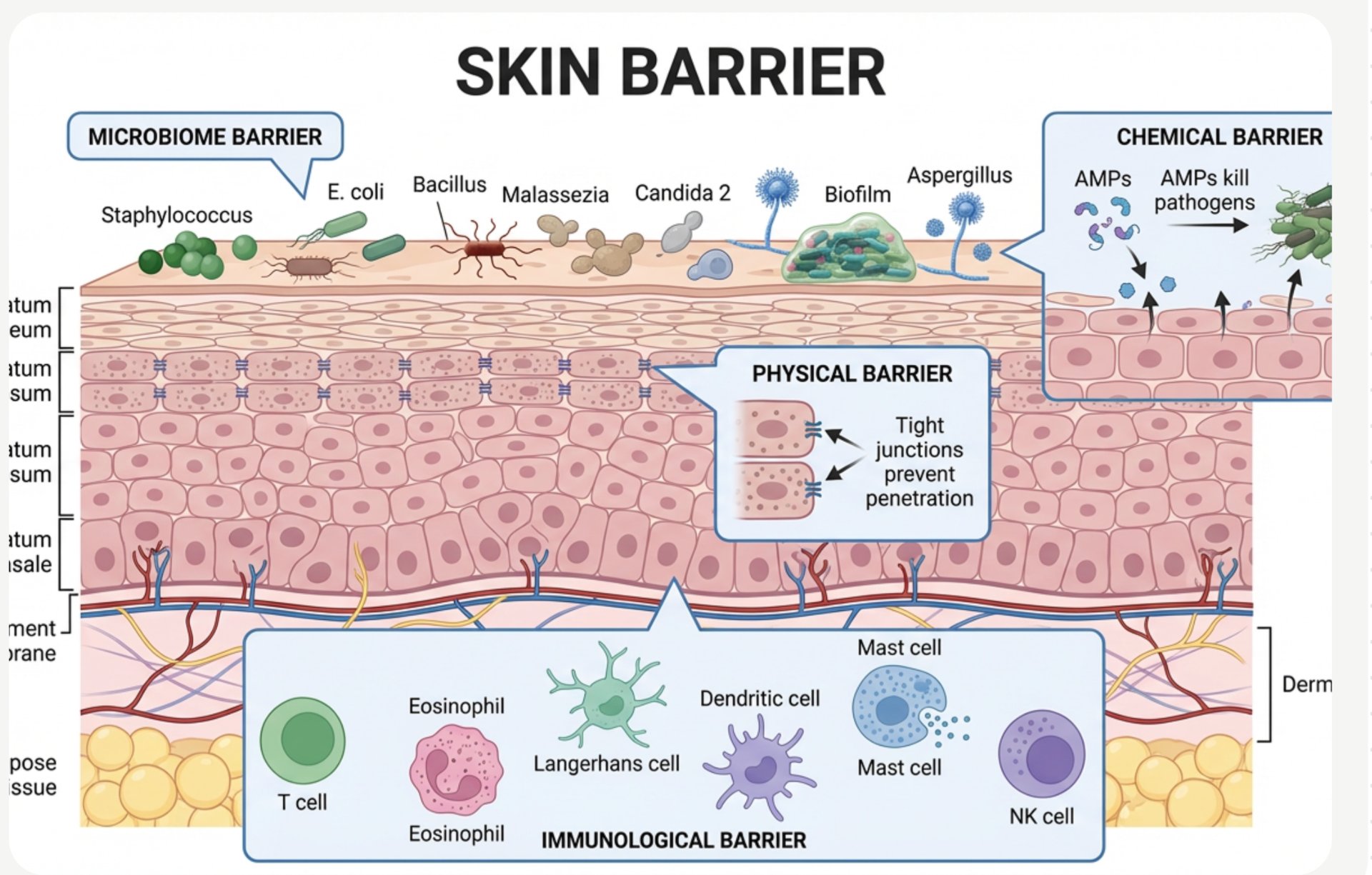
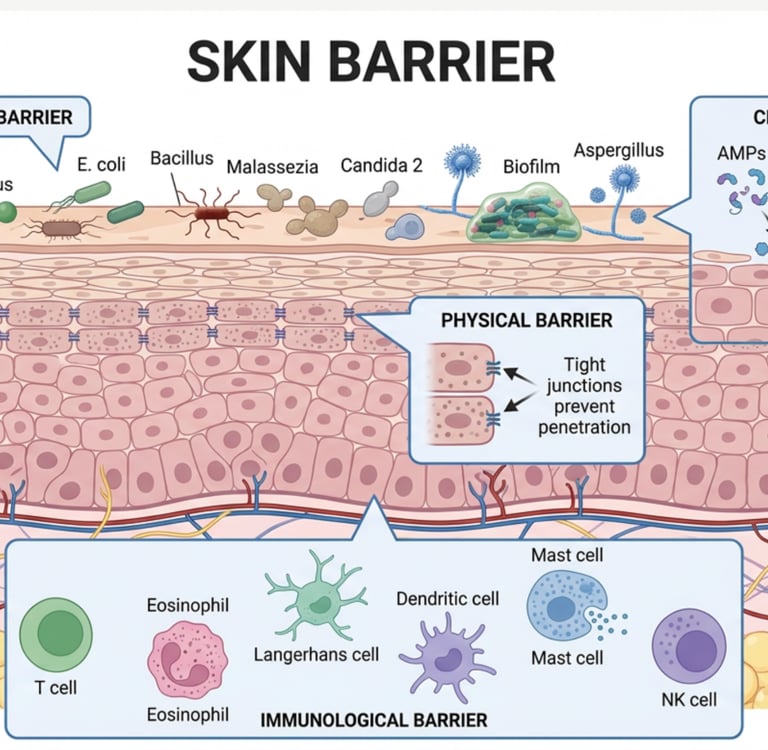
Source: Scispace
How do I repair a damaged skin barrier naturally?
To repair a damaged skin barrier naturally: stop all active ingredients (acids, retinol, vitamin C) temporarily to allow recovery. Use only a gentle, minimal-ingredient moisturiser — Wellniz Coconut Moisturisers contain cold-pressed coconut oil (penetrating nourishment) and beeswax (breathable occlusive barrier) that directly support barrier repair. Avoid sulphate cleansers. Use cool rather than hot water. Apply moisturiser to damp skin. Maintain SPF to prevent UV from compounding barrier damage. Most people see significant improvement within 2-4 weeks of this simplified, protective approach.
The Foundation Everything Else Depends On
India's skincare market is flooded with actives — retinol, niacinamide, vitamin C serums, AHA peels, BHA exfoliants, hyaluronic acid. The conversation around skincare has become increasingly sophisticated, focused on single powerful ingredients and their specific mechanisms. And in this explosion of active ingredient obsession, a paradox has emerged: millions of Indians now have skin that is more reactive, more sensitised, and harder to manage than before they started their expensive, multi-step routines.
The reason, in most cases, is a damaged skin barrier. It is not a lack of actives that is causing the problem. It is too many actives stripping the protective layer that keeps everything else in balance. The 2026 market data is unequivocal: skin barrier repair is now the fastest-growing skincare category in India, driven by consumers correcting the consequences of overcomplicated routines.
What the Skin Barrier Actually Is?
The skin barrier is not a single layer. It is the stratum corneum — the outermost layer of skin — together with the lipid matrix that holds it together. The classic analogy is a brick wall: skin cells (keratinocytes) are the bricks, and the lipids (fatty acids, ceramides, cholesterol) that surround them are the mortar.
When this mortar is intact, the barrier performs two critical functions simultaneously: it prevents water from evaporating out of the skin (reducing trans-epidermal water loss), and it blocks environmental aggressors from getting in — bacteria, pollutants, UV radiation, allergens. When the mortar is compromised — stripped by harsh cleansers, dissolved by acids, or depleted by environmental stress — both functions fail simultaneously.
The result is skin that loses moisture faster than it can replace it (persistent dryness), lets in irritants that would normally be blocked (increased reactivity and sensitivity), and is more susceptible to bacterial and fungal colonisation (increased acne and skin infections).
How Indian Skin Gets Damaged: The Seven Most Common Causes
1. Over-Exfoliation with AHAs and BHAs
Chemical exfoliants (glycolic acid, lactic acid, salicylic acid) dissolve the bonds holding dead skin cells together, accelerating cell turnover. Used appropriately — once or twice per week — they improve texture and tone. Used daily, or at high concentrations, they dissolve not just dead skin cells but the living lipid matrix beneath them, directly damaging the barrier.
2. Sulphate-Based Cleansers
Sodium lauryl sulphate creates the lather in most mainstream cleansers and body washes. It is an effective degreaser — that is precisely the problem. It does not distinguish between the bacterial oils you want to remove and the skin's own lipids that constitute the barrier. Daily SLS cleansing continuously strips the barrier faster than it can regenerate.
3. Overuse of Retinol
Retinol is one of the most evidence-backed skincare actives available. It is also one of the most barrier-disruptive when overused. Common presentation: redness, peeling, tightness, and sudden sensitivity after starting a retinol product or increasing frequency. This is classic retinol-induced barrier compromise.
4. Hard Water
Tap water in Delhi, Bangalore, Pune, and most Indian metros is mineral-rich — high in calcium and magnesium ions. These ions deposit on the skin surface after washing, raising skin pH (from the ideal 4.5 to 6+) and disrupting the acid mantle. Over time, they degrade the lipid matrix. This is a pervasive, invisible cause of barrier damage that most skincare routines do not address.
Wellniz Rose Mist (Rs. 220), with its naturally acidic pH of 4.0-4.5, actively counteracts the alkaline disruption from hard water. See our rose water guide for the full mechanism.
5. Indoor Air Conditioning
AC reduces ambient humidity, accelerating TEWL from the skin barrier. Office workers spending 8+ hours per day in heavily air-conditioned environments experience chronic barrier dehydration that accumulates over months.
6. UV Damage
UV radiation, particularly UVB, degrades both the lipid matrix and the collagen below it. Unprotected cumulative UV exposure over years is one of the primary drivers of progressive barrier weakening in Indian skin, where UV Index is high for most of the year.
7. Synthetic Fragrance
Synthetic fragrance — listed as 'parfum' on ingredient labels — is the single most common cause of contact dermatitis and barrier sensitisation in cosmetics. It triggers inflammatory responses in susceptible skin that compound barrier damage over time.
Signs Your Skin Barrier Is Damaged
Products that previously felt fine now sting or burn on application
Moisturiser absorbs almost instantly but skin still feels tight or dry an hour later
Skin looks dull and feels rough despite regular cleansing
Increased frequency and severity of breakouts without any change in routine
Persistent redness or reactivity that has no obvious trigger
Skin that flushes or becomes blotchy with temperature changes
Visible flaking or rough texture despite using moisturiser daily
How to Repair the Barrier: The Wellniz Approach
Step 1: Simplify Immediately
Stop all active ingredients. No AHAs, no BHAs, no retinol, no vitamin C serum. The barrier cannot repair under continuous acid or retinoid assault. The repair period typically takes 2-4 weeks. Reintroduce actives slowly, one at a time and at low frequency, once barrier function is restored.
Step 2: Switch to Barrier-Supporting Cleansing
Replace sulphate cleansers with besan paste, oat flour + water, or a completely sulphate-free cleanser with a short ingredient list. In the morning, consider a water rinse only — over-cleansing is a primary barrier disruptor, and morning cleansing is rarely necessary unless skin is significantly oily.
Step 3: Restore the Lipid Layer with the Right Moisturiser
The lipid layer that constitutes the barrier is primarily composed of fatty acids, ceramides, and cholesterol. Cold-pressed coconut oil's lauric acid directly replenishes the fatty acid component and penetrates into the barrier layer rather than just sitting on the surface. Beeswax provides the occlusive top layer that prevents TEWL while the barrier rebuilds beneath it. Applied to damp skin, Wellniz Coconut Moisturiser provides both the penetrating nourishment and the surface protection that barrier repair requires.
Step 4: Restore Skin pH with Rose Mist
After every cleanse, apply Wellniz Rose Mist while skin is still damp. Its natural pH of 4.0-4.5 restores the acid mantle that supports barrier enzyme function. This step is particularly important for anyone using tap water, which is alkaline and continues to disrupt pH even after a gentle cleanse.
Step 5: Maintain SPF Every Morning
UV damage is cumulative and ongoing. During barrier repair, skin is more UV-vulnerable, not less. SPF 30+ every morning, applied after the moisturiser has absorbed, provides the UV barrier that the compromised skin barrier temporarily cannot.
Step 6: Be Patient
The skin renews the stratum corneum on a 28-day cycle. Meaningful barrier repair typically takes 2-4 weeks of simplified, gentle care. Most people see initial improvement within 1-2 weeks, with full recovery by 4-6 weeks for moderate damage.
A damaged barrier is the most common reason skincare 'stops working'. If your skin suddenly became reactive to products that previously felt fine, the problem is almost certainly the barrier — not the products. The answer is not adding more products. It is removing actives, simplifying to a protective minimal routine, and giving the skin time to rebuild.
Frequently Asked Questions
How do I know if my skin barrier is damaged?
Signs include stinging when products are applied, moisture not lasting, increased breakouts without routine changes, persistent redness or reactivity, and rough texture despite moisturising. Any skin that suddenly becomes sensitive to previously tolerated products likely has a compromised barrier.
How long does it take to repair a damaged skin barrier?
The skin renews its outermost layer on approximately a 28-day cycle. With a simplified, gentle routine (no actives, barrier-supporting moisturiser, SPF), most people see meaningful improvement within 2-4 weeks and full recovery within 4-6 weeks for moderate damage.
Can I use Wellniz products with actives like retinol?
Yes, on alternating days or in different routine steps. Wellniz products do not contain anything that conflicts with retinol. During active barrier repair, pause retinol and other actives entirely. When reintroducing them, use Wellniz moisturiser as the recovery step after actives to maintain the barrier alongside the active treatment.
Is natural skincare better for damaged skin barrier?
Minimal, natural formulations are generally safer for damaged barriers because they contain fewer potential irritants. Synthetic fragrance, sulphates, and some preservatives are common triggers for barrier sensitisation. Wellniz products contain none of these. The three-ingredient anhydrous formula is one of the least likely formulas on the market to cause or perpetuate barrier irritation.
Does ceramide-based skincare repair barriers better than natural oils?
Ceramides are the most studied barrier repair ingredient and have strong clinical backing. Cold-pressed coconut oil's lauric acid is a precursor to some of the fatty acids used in ceramide production, and replenishes the fatty acid component of the barrier. For severe eczema or clinically compromised barriers, a ceramide-based prescription product may be necessary alongside natural moisturisation. For typical environmental barrier damage, Wellniz's coconut-beeswax formula provides effective repair support.
Can overcleansing damage the skin barrier?
Yes. This is one of the most common causes of barrier damage, particularly washing the skin more than twice daily or using a foaming cleanser in the morning when skin is not significantly dirty. The morning cleanse is often the most unnecessary step in a routine — a water rinse is typically sufficient unless skin is very oily.
Does diet affect skin barrier health?
Yes significantly. The barrier's lipid matrix requires essential fatty acids (omega-3, omega-6) that must come from diet — the body cannot synthesise them. Indian diets low in healthy fats (particularly omega-3 from flaxseed, walnuts, fish) can produce structurally weaker barriers. Adequate hydration, zinc (found in seeds, legumes), and vitamin E (nuts, oils) also support barrier function.
Is skin purging the same as barrier damage?
No. Skin purging is a temporary increase in breakouts triggered by a new active ingredient accelerating cell turnover. It resolves within 2-6 weeks. Barrier damage is a structural compromise of the protective lipid layer that produces persistent sensitivity, reactivity, and moisture loss. Purging happens in typical breakout locations; barrier damage produces widespread reactivity and is not limited to breakout areas.
Can Wellniz Neem Mist help repair the barrier?
Neem Mist's anti-inflammatory properties help by reducing the inflammatory load on damaged barrier skin. During active barrier repair, use it selectively on areas with redness or irritation rather than across all skin. Rose Mist is generally better as the primary toner during barrier repair because of its pH-restoring properties.
Get in touch
hello@wellniz.in

Our Promise
No artificial ingredients used in our products
Terms of Service