FREE SHIPPING ON ORDERS OVER ₹599 · HANDMADE FRESH IN KERALA

Stretch Marks: What They Are, Why They Form, and What Natural Care Actually Does
Stretch marks are dermis-level collagen tears that no topical product can erase. But consistent natural care during and after formation makes a real difference. This honest guide explains the science and what Wellniz products genuinely contribute.
6/12/202611 min read
The Honest Starting Point: What Stretch Marks Actually Are
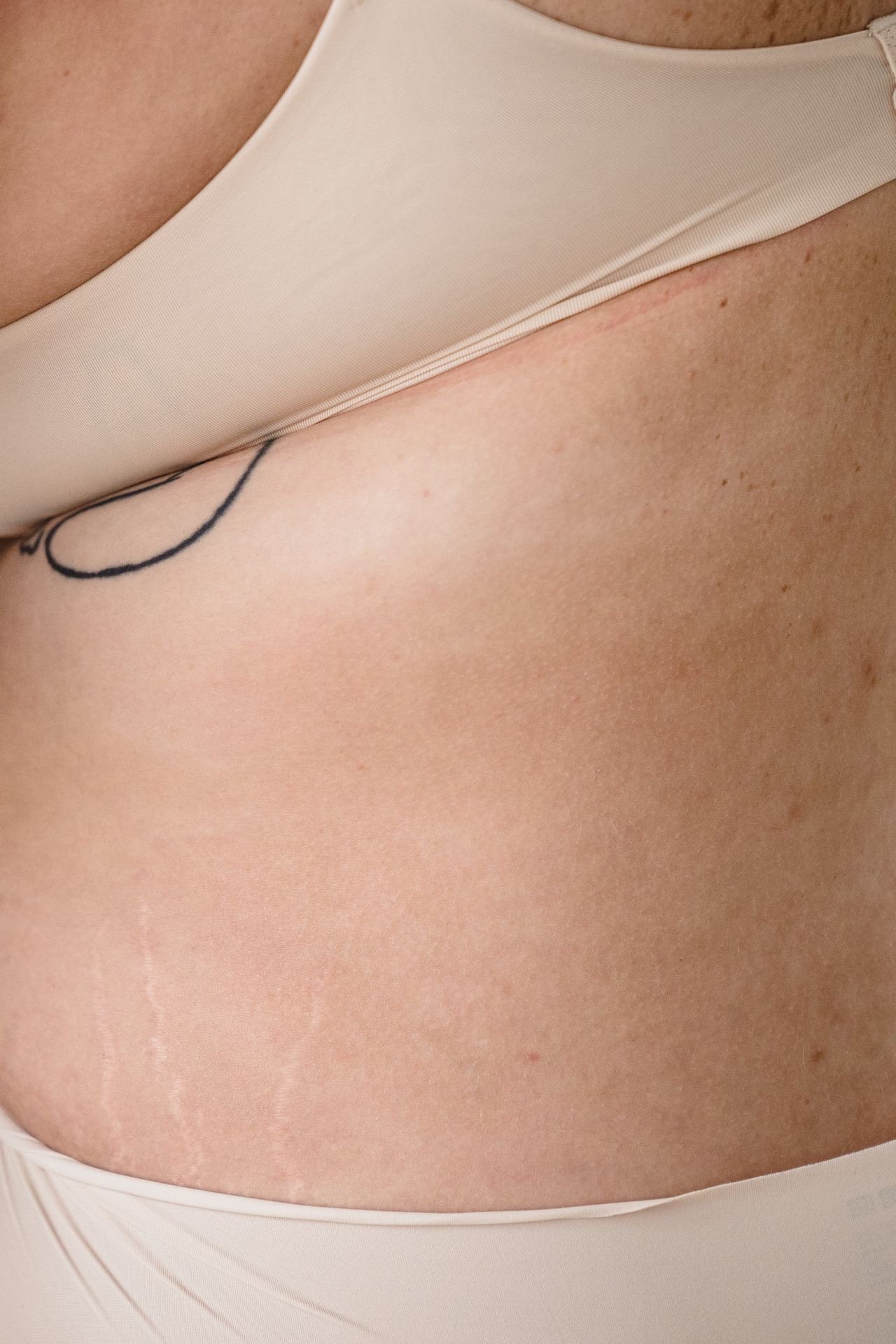
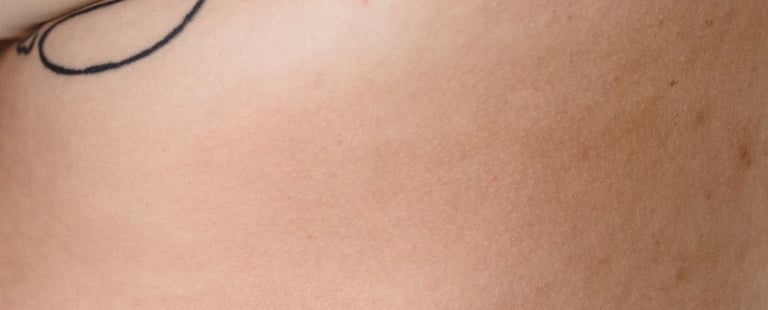
Stretch marks (striae distensae) are not surface blemishes. They are scars in the dermis — the layer of skin below the epidermis — where collagen and elastin fibres have torn under the mechanical stress of rapid skin stretching. The epidermis (outer layer) is undamaged; the marks are visible through it because the dermis beneath has lost its normal structure.
This is why no topical product can 'erase' stretch marks. Creams, oils, and serums work on the epidermis and the upper dermis. The structural damage in established stretch marks is in the mid-to-deep dermis. Laser treatments and microneedling that reach deeper tissue can remodel them significantly. Topicals cannot.
What topicals genuinely do is threefold: support skin elasticity and hydration during the period of rapid stretching (which reduces severity of mark formation), accelerate the fading process from red-purple to silver-white, and improve the texture and appearance of the skin over the affected area.
Why Stretch Marks Form: Four Triggers
1. Pregnancy
The most common cause. Rapid abdominal growth in the second and third trimester stretches skin faster than collagen production can compensate. 50-90% of pregnant women develop stretch marks, typically on the abdomen, breasts, hips, and thighs. Genetic predisposition plays a role — if your mother had significant stretch marks in pregnancy, your risk is higher.
2. Adolescent Growth Spurts
Rapid linear growth in adolescence stretches skin faster than it can adapt, particularly on the thighs, buttocks, and upper arms. Boys often develop them during sudden height increases; girls more commonly on hips and thighs. Indian adolescents are frequently unaware this is normal, causing unnecessary distress.
3. Rapid Weight Changes
Both rapid weight gain and weight loss can cause stretch marks — gain from the mechanical stretching, loss from the sudden reduction in subcutaneous tissue support. Repeated cycles of significant weight change produce the most visible marks.
4. Rapid Muscle Growth
Athletes, particularly those building muscle mass rapidly, develop stretch marks on the shoulders, upper arms, and chest. These are mechanically identical to other striae but form from muscle expansion rather than fat or pregnancy.
The Biology of How Marks Develop and Fade
Fresh stretch marks (striae rubrae) appear red, pink, or purple — the colour comes from the dilated blood vessels visible through the thinned skin over the damaged dermis. At this stage, active remodelling is occurring in the dermis. This is the window during which topical care is most effective at reducing final appearance.
Over 6-12 months, the blood vessels constrict and the marks fade to silver-white (striae albae). At this stage, the remodelling phase is largely complete. Topical products have less effect on established silver marks than on fresh red ones.
The implication is clear: topical care is most impactful during formation and in the first 6-12 months of a mark's existence. Starting early produces the best outcomes.
What Natural Ingredients Genuinely Contribute
Cold-Pressed Coconut Oil: Elasticity and Penetrating Nourishment
Cold-pressed coconut oil's lauric acid penetrates the outer skin layers, delivering fatty acid nourishment that supports the skin's suppleness during the stretching process. Well-hydrated, nourished skin can accommodate more stretch before tearing — regular application during pregnancy or growth phases measurably reduces mark severity in clinical observations. The penetration mechanism is the key: it is not a surface coating but genuine tissue nourishment.
Beeswax: Occlusive Barrier Supporting Hydration Retention
Beeswax's breathable occlusive film prevents the transepidermal water loss that leaves skin dry and less elastic. Additionally, beeswax contains naturally occurring vitamin A, which supports keratinocyte proliferation — the process by which new skin cells replace damaged ones. This gentle cellular renewal contribution is meaningful for accelerating the fading of stretch marks from red to silver and for improving skin texture over the affected area.
Sandalwood: MMP-1 Inhibition and Wound Healing
Alpha-santalol in sandalwood inhibits MMP-1 — the enzyme responsible for collagen degradation. In the context of stretch marks, where collagen integrity is the fundamental issue, this inhibition helps maintain the surrounding healthy collagen while the damaged area remodels. Sandalwood also promotes keratinocyte proliferation for wound healing, directly supporting the skin's natural repair process over the affected area.
Rose Essential Oil: Antioxidant Support and Skin Tone
Rose essential oil's antioxidant compounds protect the skin around stretch marks from the oxidative stress that can worsen their appearance. Its vitamin-rich profile supports overall skin health and contributes to the gradual improvement in the texture and tone of the skin over affected areas.
The Honest Starting Point: What Stretch Marks Actually Are
Stretch marks (striae distensae) are not surface blemishes. They are scars in the dermis — the layer of skin below the epidermis — where collagen and elastin fibres have torn under the mechanical stress of rapid skin stretching. The epidermis (outer layer) is undamaged; the marks are visible through it because the dermis beneath has lost its normal structure.
This is why no topical product can 'erase' stretch marks. Creams, oils, and serums work on the epidermis and the upper dermis. The structural damage in established stretch marks is in the mid-to-deep dermis. Laser treatments and microneedling that reach deeper tissue can remodel them significantly. Topicals cannot.
What topicals genuinely do is threefold: support skin elasticity and hydration during the period of rapid stretching (which reduces severity of mark formation), accelerate the fading process from red-purple to silver-white, and improve the texture and appearance of the skin over the affected area.
Why Stretch Marks Form: Four Triggers
1. Pregnancy
The most common cause. Rapid abdominal growth in the second and third trimester stretches skin faster than collagen production can compensate. 50-90% of pregnant women develop stretch marks, typically on the abdomen, breasts, hips, and thighs. Genetic predisposition plays a role — if your mother had significant stretch marks in pregnancy, your risk is higher.
2. Adolescent Growth Spurts
Rapid linear growth in adolescence stretches skin faster than it can adapt, particularly on the thighs, buttocks, and upper arms. Boys often develop them during sudden height increases; girls more commonly on hips and thighs. Indian adolescents are frequently unaware this is normal, causing unnecessary distress.
3. Rapid Weight Changes
Both rapid weight gain and weight loss can cause stretch marks — gain from the mechanical stretching, loss from the sudden reduction in subcutaneous tissue support. Repeated cycles of significant weight change produce the most visible marks.
4. Rapid Muscle Growth
Athletes, particularly those building muscle mass rapidly, develop stretch marks on the shoulders, upper arms, and chest. These are mechanically identical to other striae but form from muscle expansion rather than fat or pregnancy.
The Biology of How Marks Develop and Fade
Fresh stretch marks (striae rubrae) appear red, pink, or purple — the colour comes from the dilated blood vessels visible through the thinned skin over the damaged dermis. At this stage, active remodelling is occurring in the dermis. This is the window during which topical care is most effective at reducing final appearance.
Over 6-12 months, the blood vessels constrict and the marks fade to silver-white (striae albae). At this stage, the remodelling phase is largely complete. Topical products have less effect on established silver marks than on fresh red ones.
The implication is clear: topical care is most impactful during formation and in the first 6-12 months of a mark's existence. Starting early produces the best outcomes.
What Natural Ingredients Genuinely Contribute
Cold-Pressed Coconut Oil: Elasticity and Penetrating Nourishment
Cold-pressed coconut oil's lauric acid penetrates the outer skin layers, delivering fatty acid nourishment that supports the skin's suppleness during the stretching process. Well-hydrated, nourished skin can accommodate more stretch before tearing — regular application during pregnancy or growth phases measurably reduces mark severity in clinical observations. The penetration mechanism is the key: it is not a surface coating but genuine tissue nourishment.
Beeswax: Occlusive Barrier Supporting Hydration Retention
Beeswax's breathable occlusive film prevents the transepidermal water loss that leaves skin dry and less elastic. Additionally, beeswax contains naturally occurring vitamin A, which supports keratinocyte proliferation — the process by which new skin cells replace damaged ones. This gentle cellular renewal contribution is meaningful for accelerating the fading of stretch marks from red to silver and for improving skin texture over the affected area.
Sandalwood: MMP-1 Inhibition and Wound Healing
Alpha-santalol in sandalwood inhibits MMP-1 — the enzyme responsible for collagen degradation. In the context of stretch marks, where collagen integrity is the fundamental issue, this inhibition helps maintain the surrounding healthy collagen while the damaged area remodels. Sandalwood also promotes keratinocyte proliferation for wound healing, directly supporting the skin's natural repair process over the affected area.
Rose Essential Oil: Antioxidant Support and Skin Tone
Rose essential oil's antioxidant compounds protect the skin around stretch marks from the oxidative stress that can worsen their appearance. Its vitamin-rich profile supports overall skin health and contributes to the gradual improvement in the texture and tone of the skin over affected areas.
How to Use Wellniz for Stretch Marks
Prevention Phase (During Rapid Growth)
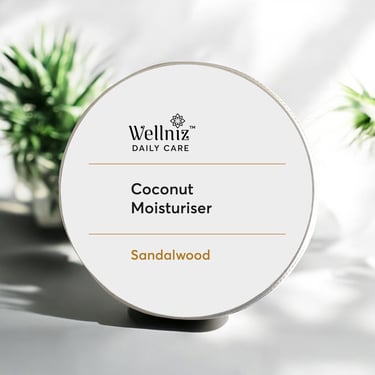
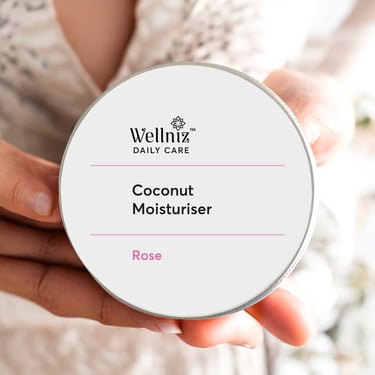
Apply Wellniz Coconut Rose or Coconut Sandalwood Moisturiser to areas of expected stretching daily — abdomen, breasts, hips, and thighs during pregnancy; thighs and arms during adolescent growth spurts
Apply to slightly damp skin after showering — the damp-skin method dramatically increases absorption of the lauric acid compounds
Use twice daily (morning and evening) for maximum hydration maintenance
Start early — before marks appear, not after
Active Marks Phase (Fresh Red-Purple Marks)
Apply Wellniz Coconut Sandalwood Moisturiser directly to fresh marks twice daily — the sandalwood's MMP-1 inhibition and wound-healing support are most relevant at this stage
A gentle circular massage during application increases local circulation and may support tissue remodelling
Maintain consistent daily application for at least 8-12 weeks — the remodelling windo
Fading Phase (Established Silver Marks)
Continue Coconut Sandalwood Moisturiser or switch to Coconut Rose for ongoing skin health maintenance. Expectations should be realistic at this stage — topical products will not structurally remodel established striae albae, but they maintain the surrounding skin's health and can improve overall texture and feel. For significant structural remodelling of established marks, consult a dermatologist about professional options.
Pregnancy note: all Wellniz moisturisers contain essential oils. Sandalwood and rose are generally considered among the safer essential oils during pregnancy, but guidelines vary by trimester. Consult your obstetrician or midwife before introducing any new skincare product during pregnancy, including natural ones.
Frequently Asked Questions
Can stretch marks be completely removed naturally?
No. Established stretch marks are dermis-level collagen scars that topical products cannot structurally reverse. Natural care can reduce how visible they are, accelerate fading from red to silver, and improve skin texture — but complete removal requires professional dermatological treatments like fractional laser or microneedling. Topicals are most effective during mark formation, not after.
How quickly does coconut oil work on stretch marks?
During the prevention phase (applied before marks form), consistent daily coconut oil application measurably reduces the severity of marks over the 2-3 months of a growth phase. For fading existing red marks, expect to see gradual improvement over 8-16 weeks. Silver marks respond more slowly and less completely to topical treatment.
Is Wellniz Coconut Sandalwood safe during pregnancy?
Sandalwood essential oil is generally considered among the lower-risk essential oils during pregnancy, but official recommendations vary. Always consult your obstetrician before using any essential oil-containing product during pregnancy. The Coconut Rose variant is more widely recommended for pregnancy as rose is considered very low risk.
When should I start applying for stretch mark prevention during pregnancy?
Start from the beginning of the second trimester when the abdomen begins expanding. The earlier you establish a daily moisturising routine on the expected stretch areas, the better your skin's hydration and elasticity will be maintained during the critical growth period.
Do men get stretch marks?
Yes. Men develop stretch marks from rapid muscle growth (common in athletes and weight trainers), rapid weight gain or loss, and adolescent growth spurts. The same natural care approach applies — prevention is more effective than treatment, and cold-pressed coconut oil's lauric acid nourishment works on male skin identically to female skin.
Is Bio-Oil better than Wellniz for stretch marks?
Bio-Oil contains mineral oil (petroleum derivative) as its primary base, which coats the skin without nourishing it. Wellniz's cold-pressed coconut oil penetrates the skin layers and delivers fatty acid nourishment. Wellniz Coconut Sandalwood also adds alpha-santalol's MMP-1 inhibition. The mechanism of action for genuine skin nourishment is stronger in Wellniz at a comparable or lower price point.
Can teenagers use Wellniz for adolescent stretch marks?
Yes. Wellniz products are safe for teenage skin. For adolescent stretch marks on thighs or upper arms, Wellniz Coconut Rose Moisturiser is the most appropriate choice — gentle, nourishing, and without the intensity of Tea Tree or Eucalyptus which are better suited to acne.
Do stretch marks fade completely on their own?
Most stretch marks naturally fade from red-purple to silver-white over 6-18 months without treatment. They do not completely disappear without professional intervention. Natural care with consistent nourishing moisturisation accelerates this fading process and improves the final appearance.
How to Use Wellniz for Stretch Marks
Prevention Phase (During Rapid Growth)
Apply Wellniz Coconut Rose or Coconut Sandalwood Moisturiser to areas of expected stretching daily — abdomen, breasts, hips, and thighs during pregnancy; thighs and arms during adolescent growth spurts
Apply to slightly damp skin after showering — the damp-skin method dramatically increases absorption of the lauric acid compounds
Use twice daily (morning and evening) for maximum hydration maintenance
Start early — before marks appear, not after
Active Marks Phase (Fresh Red-Purple Marks)
Apply Wellniz Coconut Sandalwood Moisturiser directly to fresh marks twice daily — the sandalwood's MMP-1 inhibition and wound-healing support are most relevant at this stage
A gentle circular massage during application increases local circulation and may support tissue remodelling
Maintain consistent daily application for at least 8-12 weeks — the remodelling window
Fading Phase (Established Silver Marks)
Continue Coconut Sandalwood Moisturiser or switch to Coconut Rose for ongoing skin health maintenance. Expectations should be realistic at this stage — topical products will not structurally remodel established striae albae, but they maintain the surrounding skin's health and can improve overall texture and feel. For significant structural remodelling of established marks, consult a dermatologist about professional options.
Pregnancy note: all Wellniz moisturisers contain essential oils. Sandalwood and rose are generally considered among the safer essential oils during pregnancy, but guidelines vary by trimester. Consult your obstetrician or midwife before introducing any new skincare product during pregnancy, including natural ones.
Frequently Asked Questions
Can stretch marks be completely removed naturally?
No. Established stretch marks are dermis-level collagen scars that topical products cannot structurally reverse. Natural care can reduce how visible they are, accelerate fading from red to silver, and improve skin texture — but complete removal requires professional dermatological treatments like fractional laser or microneedling. Topicals are most effective during mark formation, not after.
How quickly does coconut oil work on stretch marks?
During the prevention phase (applied before marks form), consistent daily coconut oil application measurably reduces the severity of marks over the 2-3 months of a growth phase. For fading existing red marks, expect to see gradual improvement over 8-16 weeks. Silver marks respond more slowly and less completely to topical treatment.
Is Wellniz Coconut Sandalwood safe during pregnancy?
Sandalwood essential oil is generally considered among the lower-risk essential oils during pregnancy, but official recommendations vary. Always consult your obstetrician before using any essential oil-containing product during pregnancy. The Coconut Rose variant is more widely recommended for pregnancy as rose is considered very low risk.
When should I start applying for stretch mark prevention during pregnancy?
Start from the beginning of the second trimester when the abdomen begins expanding. The earlier you establish a daily moisturising routine on the expected stretch areas, the better your skin's hydration and elasticity will be maintained during the critical growth period.
Do men get stretch marks?
Yes. Men develop stretch marks from rapid muscle growth (common in athletes and weight trainers), rapid weight gain or loss, and adolescent growth spurts. The same natural care approach applies — prevention is more effective than treatment, and cold-pressed coconut oil's lauric acid nourishment works on male skin identically to female skin.
Is Bio-Oil better than Wellniz for stretch marks?
Bio-Oil contains mineral oil (petroleum derivative) as its primary base, which coats the skin without nourishing it. Wellniz's cold-pressed coconut oil penetrates the skin layers and delivers fatty acid nourishment. Wellniz Coconut Sandalwood also adds alpha-santalol's MMP-1 inhibition. The mechanism of action for genuine skin nourishment is stronger in Wellniz at a comparable or lower price point.
Can teenagers use Wellniz for adolescent stretch marks?
Yes. Wellniz products are safe for teenage skin. For adolescent stretch marks on thighs or upper arms, Wellniz Coconut Rose Moisturiser is the most appropriate choice — gentle, nourishing, and without the intensity of Tea Tree or Eucalyptus which are better suited to acne.
Do stretch marks fade completely on their own?
Most stretch marks naturally fade from red-purple to silver-white over 6-18 months without treatment. They do not completely disappear without professional intervention. Natural care with consistent nourishing moisturisation accelerates this fading process and improves the final appearance.
Does coconut oil actually help with stretch marks?
Yes, with honest caveats. Cold-pressed coconut oil cannot erase established stretch marks — these are dermis-level collagen and elastin tears that are structurally below the skin's surface. However, coconut oil's lauric acid penetrates the outer skin layers to maintain hydration and elasticity in the surrounding tissue, which reduces how visible marks appear and supports the skin's natural remodelling over time. Applied consistently during rapid growth phases (pregnancy, adolescent growth spurts, weight changes), it reduces the severity of marks forming. Wellniz Coconut Rose and Coconut Sandalwood Moisturisers combine this mechanism with beeswax's barrier protection and the relevant essential oil's additional skin-repairing properties.
Get in touch
hello@wellniz.in

Our Promise
No artificial ingredients used in our products
Terms of Service