FREE SHIPPING ON ORDERS OVER ₹599 · HANDMADE FRESH IN KERALA

Turmeric for Skin: The Science Behind India's Most Ancient Glow Remedy
Turmeric has been used in Indian skincare for 4,000 years. Modern science is now confirming what every Indian grandmother knew. This guide covers what curcumin actually does for skin and how to use turmeric correctly.
5/17/202611 min read
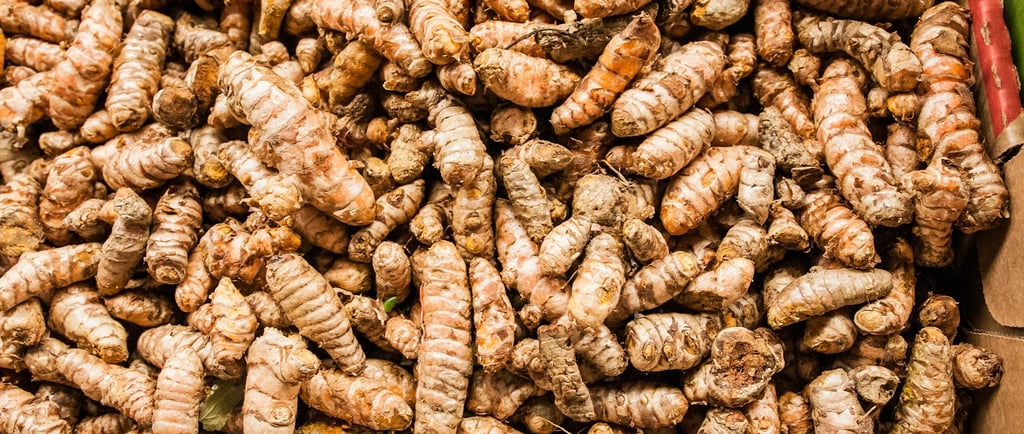
Does turmeric actually work for skin brightening?
Yes. Turmeric contains curcumin, which inhibits tyrosinase (the enzyme driving melanin overproduction), reduces NF-kB driven inflammation, and has antimicrobial properties against acne bacteria. Applied topically as a mask 2-3 times per week, most people see initial brightening within 2-3 weeks and meaningful dark spot fading within 4-6 weeks. Consistent use is required — turmeric produces cumulative results, not overnight transformation. Pair with Wellniz Rose Mist as a toner and Wellniz Coconut Sandalwood Moisturiser for best results; both complement turmeric's brightening action.
4,000 Years of Use, and Now the Science
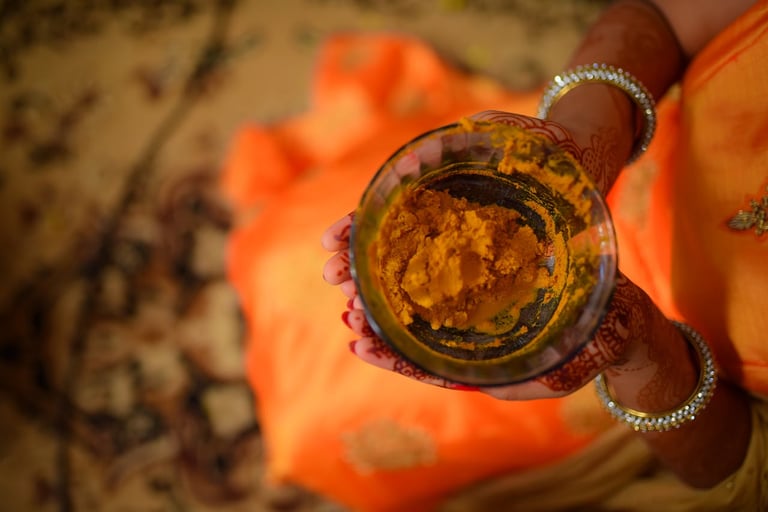
Turmeric (Curcuma longa) has been central to Indian medicine, cuisine, ritual, and skincare for over 4,000 years. The Atharva Veda, one of Hinduism's oldest sacred texts, references turmeric's healing properties. Charaka Samhita, the foundational Ayurvedic text, describes its skin applications in detail. The Haldi ceremony, where turmeric paste is applied to a bride and groom before a wedding to produce glowing skin, is one of South Asia's most enduring pre-matrimonial rituals.
None of this was superstition. Modern biochemistry has identified exactly what curcumin — turmeric's primary active compound — does to human skin at a cellular level, and the mechanisms are both multiple and measurable.
What Curcumin Actually Does: Four Proven Mechanisms
1. Tyrosinase Inhibition — The Brightening Mechanism
Tyrosinase is the enzyme that catalyses melanin synthesis. When UV radiation, inflammation, or injury triggers tyrosinase activity, melanin overproduction creates dark spots, uneven tone, and post-acne marks. Curcumin directly inhibits tyrosinase activity, reducing the rate of melanin synthesis in the triggered area.
This is the biochemical explanation for the rapid brightening visible after a Haldi ceremony — curcumin's tyrosinase inhibition produces a visible reduction in skin pigmentation within hours of application, with more sustained effects building over days and weeks of consistent use.
2. NF-kB Inhibition — The Anti-Inflammatory Mechanism
NF-kB is a transcription factor that drives inflammatory cascades in the skin. Curcumin inhibits NF-kB activation, reducing the downstream inflammatory responses that manifest as redness, swelling, and irritation. For skin concerns driven by inflammation — acne, eczema, rosacea, heat rash — this anti-inflammatory action provides direct measurable benefit.
The anti-inflammatory mechanism also makes turmeric useful for preventing the post-inflammatory hyperpigmentation that follows acne: by reducing inflammation at the active breakout stage, curcumin reduces the melanin-triggering signal, resulting in less severe dark marks after healing.
3. Antimicrobial Action — The Acne Mechanism
Curcumin has demonstrated antibacterial activity against Cutibacterium acnes — the bacterium primarily responsible for inflammatory acne. A study in PharmaTutor confirmed that curcumin's antioxidant properties effectively address acne vulgaris through antimicrobial action. Combined with its anti-inflammatory properties, this makes turmeric one of the most comprehensively useful natural acne ingredients — addressing both the bacterial cause and the inflammatory response simultaneously. For a complementary approach to acne management, neem mist adds additional antibacterial depth to a turmeric-based routine.
4. Antioxidant Protection — The Ageing Mechanism
Curcumin is a potent antioxidant — it neutralises free radicals generated by UV exposure and environmental pollution that accumulate on skin and accelerate visible ageing. For skin exposed to India's high UV radiation and urban pollution levels, this antioxidant protection is meaningful daily skin defence.
Turmeric in Context: What It Does Not Do
Being honest about limitations builds trust and prevents disappointment:
Turmeric does not provide UV protection — it is not a sunscreen and does not replace SPF
Turmeric stains — it will temporarily stain skin yellow if used in high concentrations; this fades within 30-60 minutes on most skin tones but take care with light fabrics
Turmeric alone does not cure acne — it is a supportive treatment that addresses the bacterial and inflammatory components, not a pharmaceutical-grade acne medication for severe cystic acne
Results require 2-4 weeks of consistent use for visible brightening; immediate effects are mainly anti-inflammatory and glow-producing rather than structural pigment changes
How to Use Turmeric on Skin: Four Methods
Method 1: Classic Besan-Turmeric Mask (Most Effective)
Mix 1 teaspoon turmeric with 2 tablespoons besan (chickpea flour) and enough rose water or raw milk to form a paste
Apply to clean skin, leave for 15 minutes
Rinse with cool water; follow immediately with Wellniz Rose Mist while skin is damp
Apply Wellniz Coconut Sandalwood Moisturiser to seal in the benefits
Use 2-3 times per week; not daily — besan has mild exfoliating action that can over-strip if used daily
Method 2: Anti-Acne Turmeric-Honey Spot Treatment
Mix a pinch of turmeric with half a teaspoon of raw honey
Apply directly to active breakouts or dark spots
Leave for 10-15 minutes, then rinse
Use daily on targeted areas — the honey's humectant properties complement turmeric's antibacterial action
Method 3: Turmeric Milk Skin Wash
A traditional Kerala and South Indian treatment: mix one teaspoon turmeric with enough cold raw milk to create a liquid. Apply with a cotton pad to skin, leave for 10 minutes, and rinse. The lactic acid in raw milk acts as a gentle exfoliant while turmeric provides brightening and antibacterial benefit. Excellent for body skin treatment on shoulders, back, and arms.
Method 4: Turmeric + Sandalwood Combination
The most potent natural brightening combination available without synthetic actives: mix half a teaspoon turmeric with one tablespoon sandalwood powder and rose water to form a paste. Both curcumin and alpha-santalol inhibit tyrosinase — their combined action is additive. After rinsing, apply Wellniz Rose Mist followed by Wellniz Coconut Sandalwood Moisturiser to continue the brightening action throughout the day.
The Haldi Ceremony: Ancient Practice, Modern Validation
The pre-wedding Haldi ceremony — applying turmeric paste to the bride and groom's skin the day before the wedding — exists in essentially every major Indian cultural tradition. The surface reading is ritual and blessing. The practical effect, understood implicitly by generations of Indian families, is that the skin looks measurably brighter, more even-toned, and more radiant in wedding photographs taken the next day.
This is curcumin's tyrosinase inhibition working on a rapid timeline: 12-24 hours of skin-contact time produces visible brightening through acute reduction of surface melanin production and the anti-inflammatory calming of any residual skin redness or unevenness. Four thousand years of practice did not require the biochemistry to validate it — the results were self-evident.
Combining Turmeric with Wellniz: The Complete Routine
Turmeric is maximally effective when its brightening action is supported throughout the day, not just during a weekly mask. The optimal daily routine: cleanse, apply Wellniz Rose Mist (pH balancing, anti-inflammatory preparation), then Wellniz Coconut Sandalwood Moisturiser (alpha-santalol tyrosinase inhibition throughout the day), then SPF. Add a turmeric mask 2-3 times per week. This combination addresses tyrosinase through two independent pathways simultaneously — the mask provides acute weekly treatment, the daily routine provides chronic background protection.
Frequently Asked Questions
Does turmeric permanently lighten skin?
No. Turmeric reduces overactive melanin production in areas of hyperpigmentation — dark spots, post-acne marks, sun tan — bringing them closer to the surrounding skin tone. It does not permanently alter your natural skin tone or prevent melanin production at the baseline level. If you stop using turmeric and resume unprotected sun exposure, hyperpigmentation can return.
How quickly does turmeric show results on skin?
Immediate effects (within hours) include reduced redness and a healthy glow from improved circulation. Visible brightening of surface tan takes 2-3 weeks of 2-3 weekly masks. Meaningful fading of post-acne dark spots or deeper hyperpigmentation takes 4-8 weeks of consistent use.
Why does turmeric stain skin yellow?
Curcumin is a water-insoluble pigment with strong staining properties — the same property that makes it a natural dye and gives Indian curries their colour. When applied to skin, it temporarily deposits in the outer keratinocytes. This fades on most skin tones within 30-60 minutes as the dead skin cells shed naturally. Using lower concentrations (one teaspoon per mask) and not leaving the mask on longer than 20 minutes minimises visible staining.
Is raw turmeric better than turmeric powder for skin?
Fresh turmeric root contains higher concentrations of curcumin and related compounds than dried powder. However, dried turmeric powder (the type available in every Indian kitchen) is perfectly effective for skincare and far more practical. If using fresh turmeric, grate it directly and mix immediately; fresh turmeric oxidises quickly.
Can turmeric help with eczema?
Turmeric's anti-inflammatory properties provide relief for eczema-related redness and itching. It does not cure eczema — this is a chronic immune-mediated condition requiring medical management. As a supportive topical treatment used alongside prescribed therapy, turmeric can reduce the severity and discomfort of flare-ups.
Is it safe to use turmeric on skin daily?
The mask is best used 2-3 times per week rather than daily, as besan has exfoliating properties that can over-strip with daily use. A turmeric-infused moisturiser (used daily) or spot treatment on specific dark spots (daily) is fine. Wellniz Coconut Sandalwood Moisturiser contains sandalwood oil, which like turmeric also inhibits tyrosinase, making it the ideal daily complement to a weekly turmeric mask.
Does turmeric work for men's skin?
Yes. Turmeric's mechanisms — tyrosinase inhibition, anti-inflammatory, antimicrobial — work identically on male and female skin. The primary additional benefit for men is post-shave anti-inflammatory calming: a diluted turmeric paste applied to razor-irritated skin reduces redness and inflammation significantly.
Can I use turmeric if I have oily skin?
Yes. Mix turmeric with besan and water (not oil) for oily skin types. Besan's mild astringent properties complement turmeric's antibacterial action, making this combination particularly well-suited to oily, acne-prone skin. After rinsing, apply Wellniz Neem Mist rather than a moisturiser if skin is very oily — neem provides antibacterial protection without adding oil.
1. Tyrosinase Inhibition — The Brightening Mechanism
Tyrosinase is the enzyme that catalyses melanin synthesis. When UV radiation, inflammation, or injury triggers tyrosinase activity, melanin overproduction creates dark spots, uneven tone, and post-acne marks. Curcumin directly inhibits tyrosinase activity, reducing the rate of melanin synthesis in the triggered area.
This is the biochemical explanation for the rapid brightening visible after a Haldi ceremony — curcumin's tyrosinase inhibition produces a visible reduction in skin pigmentation within hours of application, with more sustained effects building over days and weeks of consistent use.
2. NF-kB Inhibition — The Anti-Inflammatory Mechanism
NF-kB is a transcription factor that drives inflammatory cascades in the skin. Curcumin inhibits NF-kB activation, reducing the downstream inflammatory responses that manifest as redness, swelling, and irritation. For skin concerns driven by inflammation — acne, eczema, rosacea, heat rash — this anti-inflammatory action provides direct measurable benefit.
The anti-inflammatory mechanism also makes turmeric useful for preventing the post-inflammatory hyperpigmentation that follows acne: by reducing inflammation at the active breakout stage, curcumin reduces the melanin-triggering signal, resulting in less severe dark marks after healing.
3. Antimicrobial Action — The Acne Mechanism
Curcumin has demonstrated antibacterial activity against Cutibacterium acnes — the bacterium primarily responsible for inflammatory acne. A study in PharmaTutor confirmed that curcumin's antioxidant properties effectively address acne vulgaris through antimicrobial action. Combined with its anti-inflammatory properties, this makes turmeric one of the most comprehensively useful natural acne ingredients — addressing both the bacterial cause and the inflammatory response simultaneously. For a complementary approach to acne management, neem mist adds additional antibacterial depth to a turmeric-based routine.
4. Antioxidant Protection — The Ageing Mechanism
Curcumin is a potent antioxidant — it neutralises free radicals generated by UV exposure and environmental pollution that accumulate on skin and accelerate visible ageing. For skin exposed to India's high UV radiation and urban pollution levels, this antioxidant protection is meaningful daily skin defence.
Turmeric in Context: What It Does Not Do
Being honest about limitations builds trust and prevents disappointment:
• Turmeric does not provide UV protection — it is not a sunscreen and does not replace SPF
• Turmeric stains — it will temporarily stain skin yellow if used in high concentrations; this fades within 30-60 minutes on most skin tones but take care with light fabrics
• Turmeric alone does not cure acne — it is a supportive treatment that addresses the bacterial and inflammatory components, not a pharmaceutical-grade acne medication for severe cystic acne
• Results require 2-4 weeks of consistent use for visible brightening; immediate effects are mainly anti-inflammatory and glow-producing rather than structural pigment changes
How to Use Turmeric on Skin: Four Methods
Method 1: Classic Besan-Turmeric Mask (Most Effective)
• Mix 1 teaspoon turmeric with 2 tablespoons besan (chickpea flour) and enough rose water or raw milk to form a paste
• Apply to clean skin, leave for 15 minutes
• Rinse with cool water; follow immediately with Wellniz Rose Mist while skin is damp
• Apply Wellniz Coconut Sandalwood Moisturiser to seal in the benefits
• Use 2-3 times per week; not daily — besan has mild exfoliating action that can over-strip if used daily
Method 2: Anti-Acne Turmeric-Honey Spot Treatment
• Mix a pinch of turmeric with half a teaspoon of raw honey
• Apply directly to active breakouts or dark spots
• Leave for 10-15 minutes, then rinse
• Use daily on targeted areas — the honey's humectant properties complement turmeric's antibacterial action
Method 3: Turmeric Milk Skin Wash
A traditional Kerala and South Indian treatment: mix one teaspoon turmeric with enough cold raw milk to create a liquid. Apply with a cotton pad to skin, leave for 10 minutes, and rinse. The lactic acid in raw milk acts as a gentle exfoliant while turmeric provides brightening and antibacterial benefit. Excellent for body skin treatment on shoulders, back, and arms.
Method 4: Turmeric + Sandalwood Combination
The most potent natural brightening combination available without synthetic actives: mix half a teaspoon turmeric with one tablespoon sandalwood powder and rose water to form a paste. Both curcumin and alpha-santalol inhibit tyrosinase — their combined action is additive. After rinsing, apply Wellniz Rose Mist followed by Wellniz Coconut Sandalwood Moisturiser to continue the brightening action throughout the day.
IMAGE BLOCK
wellniz-turmeric-besan-rosewater-paste.jpg | Alt: DIY turmeric and besan face pack with rose water in ceramic bowl, natural Indian skincare treatment preparation
The Haldi Ceremony: Ancient Practice, Modern Validation
The pre-wedding Haldi ceremony — applying turmeric paste to the bride and groom's skin the day before the wedding — exists in essentially every major Indian cultural tradition. The surface reading is ritual and blessing. The practical effect, understood implicitly by generations of Indian families, is that the skin looks measurably brighter, more even-toned, and more radiant in wedding photographs taken the next day.
This is curcumin's tyrosinase inhibition working on a rapid timeline: 12-24 hours of skin-contact time produces visible brightening through acute reduction of surface melanin production and the anti-inflammatory calming of any residual skin redness or unevenness. Four thousand years of practice did not require the biochemistry to validate it — the results were self-evident.
Combining Turmeric with Wellniz: The Complete Routine
Turmeric is maximally effective when its brightening action is supported throughout the day, not just during a weekly mask. The optimal daily routine: cleanse, apply Wellniz Rose Mist (pH balancing, anti-inflammatory preparation), then Wellniz Coconut Sandalwood Moisturiser (alpha-santalol tyrosinase inhibition throughout the day), then SPF. Add a turmeric mask 2-3 times per week. This combination addresses tyrosinase through two independent pathways simultaneously — the mask provides acute weekly treatment, the daily routine provides chronic background protection.
Frequently Asked Questions
Does turmeric permanently lighten skin?
No. Turmeric reduces overactive melanin production in areas of hyperpigmentation — dark spots, post-acne marks, sun tan — bringing them closer to the surrounding skin tone. It does not permanently alter your natural skin tone or prevent melanin production at the baseline level. If you stop using turmeric and resume unprotected sun exposure, hyperpigmentation can return.
How quickly does turmeric show results on skin?
Immediate effects (within hours) include reduced redness and a healthy glow from improved circulation. Visible brightening of surface tan takes 2-3 weeks of 2-3 weekly masks. Meaningful fading of post-acne dark spots or deeper hyperpigmentation takes 4-8 weeks of consistent use.
Why does turmeric stain skin yellow?
Curcumin is a water-insoluble pigment with strong staining properties — the same property that makes it a natural dye and gives Indian curries their colour. When applied to skin, it temporarily deposits in the outer keratinocytes. This fades on most skin tones within 30-60 minutes as the dead skin cells shed naturally. Using lower concentrations (one teaspoon per mask) and not leaving the mask on longer than 20 minutes minimises visible staining.
Is raw turmeric better than turmeric powder for skin?
Fresh turmeric root contains higher concentrations of curcumin and related compounds than dried powder. However, dried turmeric powder (the type available in every Indian kitchen) is perfectly effective for skincare and far more practical. If using fresh turmeric, grate it directly and mix immediately; fresh turmeric oxidises quickly.
Can turmeric help with eczema?
Turmeric's anti-inflammatory properties provide relief for eczema-related redness and itching. It does not cure eczema — this is a chronic immune-mediated condition requiring medical management. As a supportive topical treatment used alongside prescribed therapy, turmeric can reduce the severity and discomfort of flare-ups.
Is it safe to use turmeric on skin daily?
The mask is best used 2-3 times per week rather than daily, as besan has exfoliating properties that can over-strip with daily use. A turmeric-infused moisturiser (used daily) or spot treatment on specific dark spots (daily) is fine. Wellniz Coconut Sandalwood Moisturiser contains sandalwood oil, which like turmeric also inhibits tyrosinase, making it the ideal daily complement to a weekly turmeric mask.
Does turmeric work for men's skin?
Yes. Turmeric's mechanisms — tyrosinase inhibition, anti-inflammatory, antimicrobial — work identically on male and female skin. The primary additional benefit for men is post-shave anti-inflammatory calming: a diluted turmeric paste applied to razor-irritated skin reduces redness and inflammation significantly.
Can I use turmeric if I have oily skin?
Yes. Mix turmeric with besan and water (not oil) for oily skin types. Besan's mild astringent properties complement turmeric's antibacterial action, making this combination particularly well-suited to oily, acne-prone skin. After rinsing, apply Wellniz Neem Mist rather than a moisturiser if skin is very oily — neem provides antibacterial protection without adding oil.


Get in touch
hello@wellniz.in

Our Promise
No artificial ingredients used in our products
Terms of Service