FREE SHIPPING ON ORDERS OVER ₹599 · HANDMADE FRESH IN KERALA

Ylang Ylang Essential Oil: The Secret Ingredient for Balanced, Glowing Skin
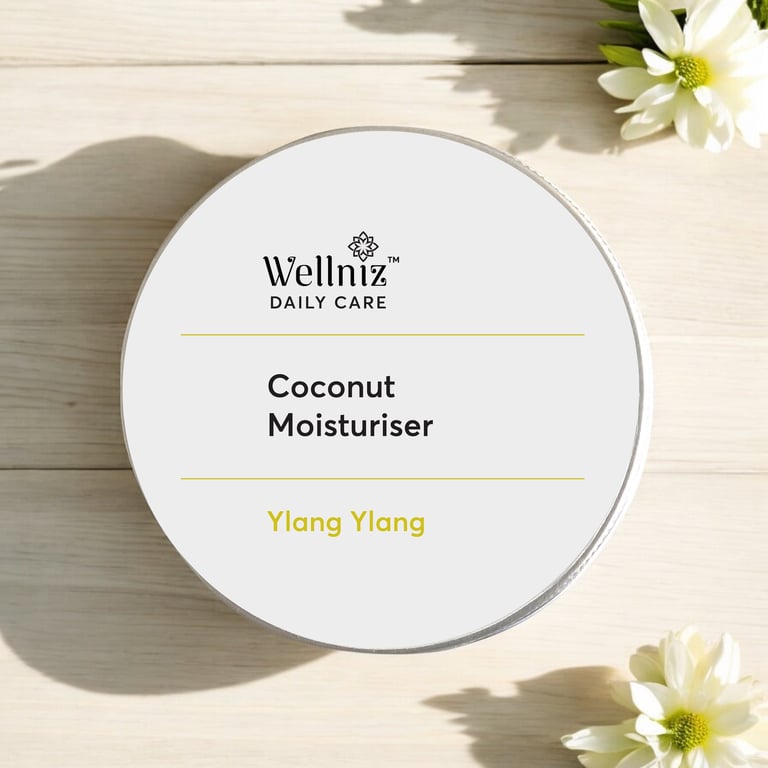
Ylang ylang essential oil balances sebum, reduces inflammation, and supports cell regeneration -- making it ideal for combination and stressed skin. Discover how Wellniz Coconut Ylang Ylang Moisturiser puts this to work for Indian skin.
4/26/20266 min read
What does ylang ylang oil do for skin?
Ylang ylang essential oil benefits for skin include: regulating sebum production to balance oily and dry areas, reducing inflammation and skin redness, supporting skin cell regeneration through its antioxidant compounds, providing mild antimicrobial protection, soothing stressed or environmentally damaged skin, and improving overall skin tone over time. Wellniz Coconut Ylang Ylang Moisturiser delivers these benefits for combination and normal skin types in a three-ingredient formulation.
Why Ylang Ylang Belongs in a Serious Skincare Routine
Ylang ylang (Cananga odorata) is native to the tropical regions of Southeast Asia and is cultivated extensively in Indonesia, the Philippines, and parts of India. Its flowers produce an intensely sweet, floral essential oil that has been used for centuries in traditional medicine, ritual, and personal care across South and Southeast Asia.
In modern skincare, ylang ylang sits in an unusual position. It is widely known in aromatherapy for its calming, mood-enhancing effects. Its use as a skin ingredient is far less discussed, despite the fact that its active compounds -- benzyl acetate, linalool, germacrene-D, and beta-caryophyllene -- have well-documented effects on the skin specifically.
The reason ylang ylang is particularly well suited to Indian skin is sebum regulation. India's climate, particularly in tropical and coastal regions, creates conditions where combination skin is extremely common -- oily in the T-zone, dry or normal on the cheeks and body. Most moisturizers treat skin as uniformly one type or the other. Ylang ylang, uniquely, helps the skin regulate itself.
Benefit 1: Sebum Regulation -- The Balancing Act
The most clinically significant skin benefit of ylang ylang is its ability to regulate sebaceous gland activity. Sebum is the skin's natural oil, produced by sebaceous glands to protect and lubricate the skin. When sebum production is dysregulated -- too high in some areas and too low in others -- the result is the classic combination skin pattern: shine on the nose and forehead, dryness on the cheeks, and unpredictable reactions across the body.
Ylang ylang's linalool and benzyl acetate compounds interact with sebaceous gland activity in a normalising way -- reducing overproduction in oily areas while supporting appropriate production in dry areas. This is different from what most 'oil-controlling' products do, which simply strip sebum indiscriminately and leave all skin drier.
For Indian skin types, which commonly show this combination pattern due to the interaction of climate, diet, and hormonal influences, this sebum-balancing property makes ylang ylang more useful than straightforward moisturizing or oil-control ingredients.
Benefit 2: Anti-Inflammatory Skin Calming
Beta-caryophyllene, one of ylang ylang's primary sesquiterpene compounds, is a potent natural anti-inflammatory agent. It activates CB2 cannabinoid receptors in the skin -- the same pathway exploited by some prescription anti-inflammatory treatments -- to reduce inflammatory cytokine production.
For skin experiencing inflammation from hormonal changes, environmental stress, minor irritation, or post-breakout redness, this anti-inflammatory action produces visible calming. The skin appears less red and feels less reactive within days of consistent use.
Benefit 3: Antioxidant Cell Protection
Ylang ylang contains significant concentrations of antioxidant compounds including germacrene-D and various flavonoids. These compounds neutralise free radicals on the skin's surface -- the reactive molecules produced by UV exposure, pollution, and metabolic processes that accumulate over time and contribute to visible skin ageing.
In Indian urban environments, where air quality index frequently reaches unhealthy levels and UV exposure is among the world's highest, daily antioxidant protection from a moisturizer is not a luxury -- it is practical maintenance for long-term skin health.
Benefit 4: Mild Antimicrobial Protection
Ylang ylang's antimicrobial properties are milder than tea tree or neem, but present. The benzyl acetate and geraniol compounds in ylang ylang oil inhibit common skin bacteria and fungi at relevant concentrations, providing gentle protection without the more assertive action of the dedicated antibacterial oils.
For skin that is generally healthy but prone to occasional breakouts, this mild antimicrobial effect provides background protection without the intensity that might irritate normal-to-dry skin.
Benefit 5: Mood and Stress Response
The mental and emotional benefits of ylang ylang are better documented than almost any other essential oil. Its primary aromatic compounds directly influence the limbic system through olfaction, producing measurable reductions in cortisol levels and heart rate. Studies confirm significant decreases in anxiety and stress markers after ylang ylang inhalation.
This matters for skin because cortisol is a primary driver of skin problems. Elevated cortisol increases sebum production, exacerbates inflammatory skin conditions, impairs skin barrier function, and slows wound healing. Skincare products that address both the skin and the stress response that worsens skin conditions are more effective than those that address only the surface.
Using Wellniz Coconut Ylang Ylang Moisturiser becomes a functional stress-reduction ritual as well as a skincare step.
Benefit 6: Skin Tone and Texture Improvement Over Time
Regular use of ylang ylang-containing products produces gradual improvements in overall skin texture and tone. The combination of sebum regulation, anti-inflammation, and antioxidant protection creates the conditions for more even, consistent skin -- not through any single dramatic mechanism, but through the cumulative effect of multiple supportive processes working simultaneously.
Most users report noticeably smoother, more even skin within four to six weeks of daily use.
Ylang Ylang and Coconut Oil: A Note for Acne-Prone Skin
As with all Wellniz coconut-based moisturizers, a small minority of people with highly acne-prone skin may find that the coconut oil base contributes to breakouts in areas with large sebaceous glands. Ylang ylang itself has a comedogenic rating of 0-1 -- it is not a pore-blocking concern.
The sebum-regulating properties of ylang ylang actually reduce the likelihood of coconut oil-related breakouts for most combination skin types. If you have highly reactive acne-prone skin, start with a patch test on a small body area before applying broadly.
How to Use Wellniz Coconut Ylang Ylang Moisturiser?
Apply to clean, slightly damp skin after showering or cleansing -- the damp skin method helps lock in moisture
Use a small amount -- a pea-sized quantity is sufficient for most body areas
Allow to absorb for 10 minutes before dressing
Ideal for evening use when the calming aromatic effect supports relaxation before sleep
Suitable for body, chest, and face; the sebum-balancing benefit is most useful on combination skin areas
Who Benefits Most from Ylang Ylang for Skin
Combination skin types with oily and dry zones -- ylang ylang's sebum regulation addresses both simultaneously
Stressed skin experiencing hormonal breakouts, redness, or irregular texture
Normal skin types seeking a daily moisturizer with multiple skin benefits
People who respond well to aromatherapy and want skincare that also addresses stress
Transitional skin between seasons -- India's monsoon-to-winter shift often destabilises combination skin
Frequently Asked Questions
What is ylang ylang oil good for on skin?
Ylang ylang oil is particularly good for combination skin because it regulates sebum production -- reducing oiliness in overactive areas while supporting moisture balance in drier areas. It also reduces skin inflammation, provides antioxidant protection, and has mild antimicrobial properties.
Can I use ylang ylang moisturiser on oily skin?
Yes. Ylang ylang's sebum-regulating properties make it suitable for oily skin. It reduces overproduction of sebum without stripping the skin the way alcohol-based products do, giving a more sustained, balanced result.
Does ylang ylang help with acne?
Ylang ylang has mild antibacterial properties and reduces the skin inflammation associated with acne. For active acne, tea tree or neem are stronger first choices. Ylang ylang is better suited to preventing and managing the conditions that lead to acne rather than treating active breakouts directly.
Is ylang ylang safe for sensitive skin?
Generally yes. Ylang ylang is well tolerated by most skin types at appropriate dilutions. However, it is a potent aromatic compound and some individuals are sensitive to its fragrance. Patch test before use if you have a history of fragrance sensitivity.
How does ylang ylang affect mood and stress?
Ylang ylang's aromatic compounds reduce cortisol levels and activate the parasympathetic nervous system, producing measurable reductions in anxiety and stress markers. Studies confirm heart rate and blood pressure reductions after ylang ylang inhalation. This is why it is one of the most commonly used essential oils in aromatherapy for stress management.
Can I use ylang ylang moisturiser every day?
Yes. Wellniz Coconut Ylang Ylang Moisturiser is formulated for daily use. The ylang ylang is present at a skin-safe concentration that provides consistent benefits without the risk of sensitisation from concentrated essential oils.
Is ylang ylang suitable for Indian climate and skin?
Yes. Ylang ylang's sebum-regulating properties are particularly relevant for Indian skin, which commonly shows combination characteristics due to the interaction of tropical climate, diet, and hormonal patterns. It works across India's regional climate variations from humid coastal areas to drier inland regions.
Does ylang ylang essential oil help with ageing skin?
Yes. Ylang ylang's antioxidant compounds protect skin from the free radical damage that accumulates into visible signs of ageing. Its anti-inflammatory properties also reduce the chronic low-level inflammation -- increasingly recognised as a driver of skin ageing -- that affects skin exposed to UV radiation and pollution daily.
What does ylang ylang smell like?
Ylang ylang has a rich, deeply floral scent with fruity and slightly spicy notes. It is often described as intensely sweet, with hints of jasmine and neroli. The scent is potent -- a small amount in a product is typically enough to create a noticeable fragrance.
Can ylang ylang moisturiser be used during pregnancy?
Most aromatherapy guidelines advise caution with ylang ylang during pregnancy, particularly in the first trimester. Pregnant women should consult their doctor before using any essential oil-containing skincare product.
Get in touch
hello@wellniz.in

Our Promise
No artificial ingredients used in our products
Terms of Service