FREE SHIPPING ON ORDERS OVER ₹599 · HANDMADE FRESH IN KERALA

Sandalwood Oil for Skin: The Most Luxurious Natural Ingredient in Ayurveda (And Why It Works)
Sandalwood oil is Ayurveda's most prized skincare ingredient -- and modern science is now confirming why. Discover what alpha-santalol does for your skin and how Wellniz Coconut Sandalwood Moisturiser delivers real results.
4/28/20266 min read
What does sandalwood oil do for skin?
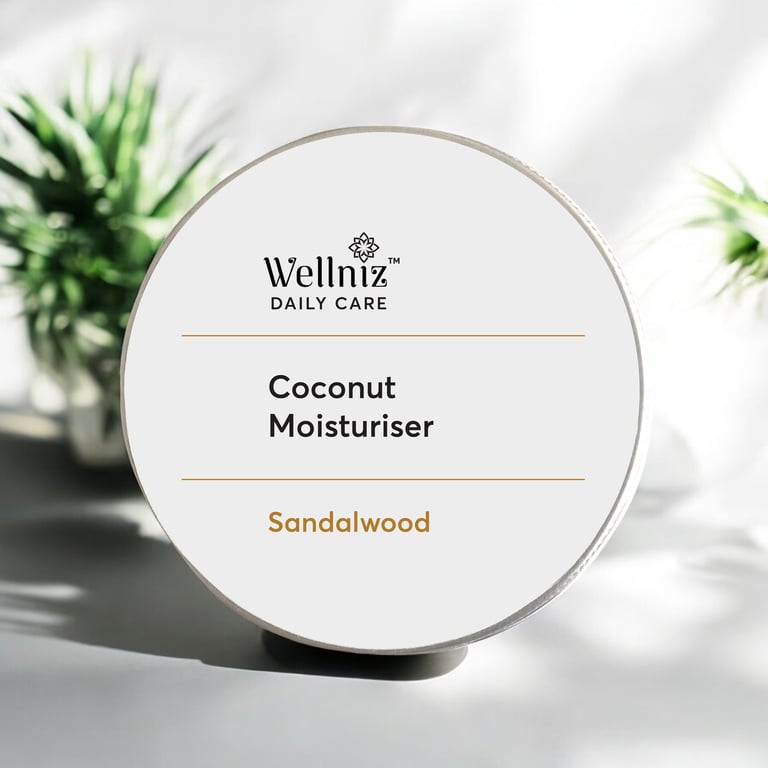
Sandalwood oil benefits skin through alpha-santalol, its primary active compound, which has clinically proven anti-inflammatory, antimicrobial, anti-ageing, and skin-tone-evening effects. It inhibits melanin overproduction to reduce dark spots, soothes chronic inflammation, supports wound healing, and provides antioxidant protection. Genuine Indian sandalwood (Santalum album) has more proven skin bioactivity than many modern actives. Wellniz Coconut Sandalwood Moisturiser delivers it at Rs. 799 in a three-ingredient formula: cold-pressed coconut oil, beeswax, and sandalwood essential oil.
Why Sandalwood Is Not Just Another Natural Ingredient?
Most natural skincare ingredients earn their reputation through tradition alone. Sandalwood earned its reputation through tradition, and then had it confirmed by biochemistry.
A 2019 scientific review published in the International Journal of Molecular Sciences compared Indian sandalwood oil (Santalum album) against CBD oil across five key skincare parameters. Indian sandalwood oil matched or outperformed CBD oil in anti-inflammatory action, wound healing, antimicrobial protection, melanin regulation, and antioxidant capacity. The review's conclusion: sandalwood oil is "a real game changer for cosmetics" with more proven bioactivity than most contemporary actives.
This is not marketing language. It is peer-reviewed science about a plant that Indian grandmothers, Ayurvedic physicians, and temple rituals have used for over 4,000 years. When ancient wisdom and modern research converge this completely, it is worth paying attention.
Note on authenticity: 'Sandalwood' in cheap products almost always means synthetic fragrance -- a compound designed to smell like sandalwood with zero skin benefit. Genuine sandalwood essential oil comes from the heartwood of Santalum album, takes 30+ years to mature, and is one of the most expensive essential oils in the world. Wellniz uses actual sandalwood essential oil, which is why the Sandalwood Moisturiser is priced at Rs. 799 rather than Rs. 299.
The Science: What Alpha-Santalol Does
The key active compound in genuine sandalwood essential oil is alpha-santalol, which makes up approximately 46-60% of the oil. Unlike most essential oil compounds, alpha-santalol has been extensively studied in isolation and as part of the whole oil. Here is what the research shows:
1. Melanin Inhibition -- Fading Dark Spots and Hyperpigmentation
Alpha-santalol is a proven inhibitor of tyrosinase, the enzyme that drives melanin synthesis. When skin is exposed to UV radiation or inflammation, tyrosinase activity increases in the affected area, producing the dark spots and uneven pigmentation that are one of the most common skin concerns among Indians, particularly those with Fitzpatrick skin types IV-VI.
By inhibiting tyrosinase at the enzymatic level, alpha-santalol reduces melanin overproduction at the source -- not by bleaching existing pigmentation, but by slowing its formation. This makes it effective for both UV-related tanning and post-inflammatory hyperpigmentation from acne or injury.
2. Anti-Inflammatory Action Through Multiple Pathways
Alpha-santalol inhibits NF-kB, one of the primary transcription factors that drives inflammatory cascades in the skin. This is the same pathway targeted by many prescription anti-inflammatory treatments. For conditions like acne, rosacea, contact dermatitis, heat rash, and general environmental skin reactivity, sandalwood's anti-inflammatory action produces visible reduction in redness and irritation.
Crucially, sandalwood works through multiple inflammatory pathways simultaneously -- a characteristic it shares with neem and few synthetic actives. Multi-pathway inhibition is more effective than single-pathway because it prevents the workaround mechanisms that reduce single-target treatments over time.
3. Antimicrobial Protection
Alpha-santalol has demonstrated activity against both gram-positive and gram-negative bacteria, including Staphylococcus aureus and various strains implicated in skin infections. Its antifungal properties are also established, making sandalwood useful not just for acne but for the full range of bacterial and fungal skin conditions common in India's climate.
4. Anti-Ageing and Collagen Support
Alpha-santalol inhibits matrix metalloproteinase-1 (MMP-1), the enzyme primarily responsible for collagen degradation in ageing skin. UV radiation activates MMP-1; sandalwood suppresses it. For skin exposed to India's intense UV environment year-round, this protective mechanism contributes meaningfully to the long-term prevention of fine lines and loss of skin elasticity.
5. Wound Healing Acceleration
Alpha-santalol has been shown to promote keratinocyte proliferation -- the process by which new skin cells grow to cover healing wounds. Combined with its antimicrobial properties, this makes sandalwood useful for post-acne skin, minor skin wounds, and any skin that has been compromised by environmental damage.
Why Sandalwood Is Particularly Relevant for Indian Skin?
Indian skin faces a specific combination of challenges that sandalwood is exceptionally well-positioned to address:
High UV exposure year-round -- alpha-santalol's tyrosinase inhibition and MMP-1 suppression directly protect against the two primary effects of UV damage on Indian skin
Higher melanin baseline -- darker skin tones develop post-inflammatory hyperpigmentation more readily; sandalwood's melanin regulation is therefore more impactful
Heat and humidity -- sandalwood's cooling, anti-inflammatory, and antiseptic properties suit warm-weather skin management
Cultural familiarity -- chandan paste has been applied to Indian skin in homes and temples for millennia; there is no adjustment curve
Sandalwood's traditional use in Ayurveda for Pitta skin types -- skin that is heat-reactive, prone to inflammation and pigmentation -- maps precisely onto what alpha-santalol has been scientifically shown to do. The ancient classification and the modern biochemistry describe the same mechanism from different vocabularies.
The Wellniz Approach: Three Ingredients, One Function Each
Wellniz Coconut Sandalwood Moisturiser contains three ingredients. Each has a clear, non-overlapping role:
Cold-pressed coconut oil -- penetrates the outer skin layers via lauric acid, delivering nourishment from within rather than coating the surface
Organic beeswax -- creates a breathable protective barrier that locks in the coconut oil's nourishment and shields skin from environmental aggressors
Sandalwood essential oil -- delivers alpha-santalol's full spectrum of anti-inflammatory, antimicrobial, pigmentation-regulating, and anti-ageing benefits
This is a formulation built on function, not marketing. There are no emulsifiers, stabilisers, synthetic preservatives, or fragrance compounds. The sandalwood smell you notice is the actual essential oil working, not a synthetic facsimile of it.
Coconut oil and acne-prone skin: A minority of people with highly acne-prone skin may find that coconut oil on its own contributes to breakouts. If you are acne-prone, patch test on a small area of skin before full use. The sandalwood's antimicrobial properties work against the conditions that lead to this reaction, but individual skin responses vary.
How to Use Wellniz Coconut Sandalwood Moisturiser?
Daily Body Moisturizer
Apply to clean, slightly damp skin after showering -- the damp-skin method locks in surface moisture
Use a small amount -- the product is concentrated; a pea-sized amount covers a significant area
Allow 10-15 minutes to absorb before dressing
Use morning or evening; evening use allows maximum absorption overnight when the skin does most of its regeneration
Targeted Treatment for Dark Spots
Apply a small amount directly to areas of hyperpigmentation or post-inflammatory marks once or twice daily. Results from tyrosinase inhibition are cumulative -- expect visible improvement within 4-6 weeks of consistent use.
Anti-Ageing Maintenance
Used as part of a daily moisturizing routine, the ongoing MMP-1 inhibition from alpha-santalol provides cumulative collagen protection. This is not a treatment for existing wrinkles -- it is a prevention strategy for the UV-related degradation that creates them over years.
The 50g vs 100g Question
Wellniz Coconut Sandalwood Moisturiser is available in 50g and 100g. The 50g is ideal for first-time users who want to assess how their skin responds. The 100g is the better value for anyone using it as a daily body moisturizer. Given the concentrated formula, 100g lasts significantly longer than a typical 200ml synthetic lotion.
What Sandalwood Is Not
Being clear about limitations builds trust. Sandalwood is not a sunscreen -- it provides no UV protection on its own and must be used alongside SPF for outdoor use. It is not a prescription treatment for clinical skin conditions like severe psoriasis or eczema (though it can support management of these conditions alongside medical care). And synthetic sandalwood fragrance -- present in most mass-market 'sandalwood' products -- has none of alpha-santalol's benefits.
Frequently Asked Questions
Is sandalwood oil good for dark spots?
Yes. Alpha-santalol in sandalwood essential oil inhibits tyrosinase, the enzyme that drives melanin overproduction in areas of sun damage or post-inflammatory hyperpigmentation. Consistent daily use produces visible fading of dark spots within 4-6 weeks. It works by slowing new melanin formation, not by bleaching existing pigmentation.
Why is Wellniz Coconut Sandalwood Moisturiser more expensive than the other variants?
Genuine sandalwood essential oil is one of the most expensive natural ingredients in skincare. The Santalum album tree takes 30+ years to mature before its heartwood can be harvested. Most cheap 'sandalwood' products use synthetic sandalwood fragrance, which smells similar but has zero of alpha-santalol's skin benefits. The Rs. 799 price reflects the actual cost of real sandalwood essential oil.
Can I use sandalwood moisturiser on acne-prone skin?
Yes, with a patch test first. Sandalwood's antimicrobial and anti-inflammatory properties are beneficial for acne-prone skin. The potential concern is the coconut oil base, which a minority of acne-prone skin types find comedogenic. Apply to a small area first and monitor for 48 hours.
What is the difference between sandalwood powder and sandalwood essential oil?
Sandalwood powder (chandan) is ground heartwood, traditionally mixed with rose water to make paste. Sandalwood essential oil is steam-distilled from the same heartwood and contains a concentrated form of alpha-santalol. The essential oil is more potent and better suited to daily skincare use; the powder is effective but messier and harder to formulate consistently.
Is Indian sandalwood better than Australian sandalwood?
Indian sandalwood (Santalum album) is considered superior for skincare due to its higher alpha-santalol content (46-60% vs approximately 20-25% in Australian Santalum spicatum). The deeper, creamier aroma and greater skin bioactivity make Santalum album the preferred choice. Wellniz uses Indian sandalwood essential oil.
How long does the 100g jar last?
With daily use as a body moisturizer using a pea-sized amount per application, 100g typically lasts 8-12 weeks. The concentrated formula means you use significantly less per application than a typical lotion.
Can sandalwood be used for body and skin?
Yes -- all Wellniz moisturisers, including the Sandalwood variant, are formulated for the full body. They work on any skin area and are particularly effective on dry elbows, knees, upper arms, and areas prone to uneven skin tone.
Does sandalwood have a strong smell?
Sandalwood essential oil has a distinctive warm, woody, slightly sweet scent -- one of the most recognisable and culturally significant aromas in India. It is noticeable but not overpowering at the concentration used in Wellniz products, and fades to a subtle warmth on the skin after absorption.
Can I use Wellniz Sandalwood Moisturiser during pregnancy?
Exercise caution. Sandalwood essential oil is generally considered one of the safer essential oils during pregnancy, but guidelines vary. Consult your doctor before using any essential oil-containing product during pregnancy.
Get in touch
hello@wellniz.in

Our Promise
No artificial ingredients used in our products
Terms of Service